The Art and Science of Natural Stone Tabletop Objects
A useful natural stone tabletop object starts with the intended use, a clear drawing and a physical sample. For custom trays, display bases and small decorative pieces, review the stone, contact surfaces, edge details, proposed protection and packing together. Small-batch quantities and any performance claims need project-specific confirmation.
This guide connects custom development, surface care and export packing for designers, independent homeware brands and hospitality buyers. DeHong Stone reviews compact natural stone objects from drawings, samples and project requirements; the steps below are a purchasing framework, not a record of tests completed on your design.
Published
Updated
Part I: From a reference image to an approved custom object
A reference photograph communicates a design direction, but it does not specify the finished product. Before requesting an OEM quotation, identify what the object will hold, how it will be handled and what it will touch. A perfume display, jewellery tray and hotel amenity organiser may need different contact surfaces and cleaning arrangements.
- Define the use. Record the objects to be displayed, usable space, expected handling and any exposure to moisture, cosmetics, heat or food.
- Translate the reference into dimensions. Mark the outside footprint, recesses, wall and base sections, edge profiles and any mating parts. Agree which dimensions require measurement and what tolerances are feasible.
- Select and review the stone. Discuss the proposed cutting area, vein direction, natural features, finish and construction. Confirm availability for the actual order.
- Agree the sample review. Use the intended contents to check fit, access, supporting faces and appearance. Record accepted variations and unresolved issues before approving production.
- Connect the approval to the quotation. Keep the drawing revision, selected material, quantity by design and packing requirements together.
The drawing-to-sample tolerance guide explains how to distinguish a design target from an accepted measured result. Compare a stone tray design direction or a compact display base with your intended use before setting the brief.
Material profiles: use the reference, then inspect the selected stone
Natural variation is part of the material selection process. The names below are commercial names used in the DeHong Stone material library; a name or photograph alone does not establish geological classification, strength, stain resistance or suitability for a particular application.
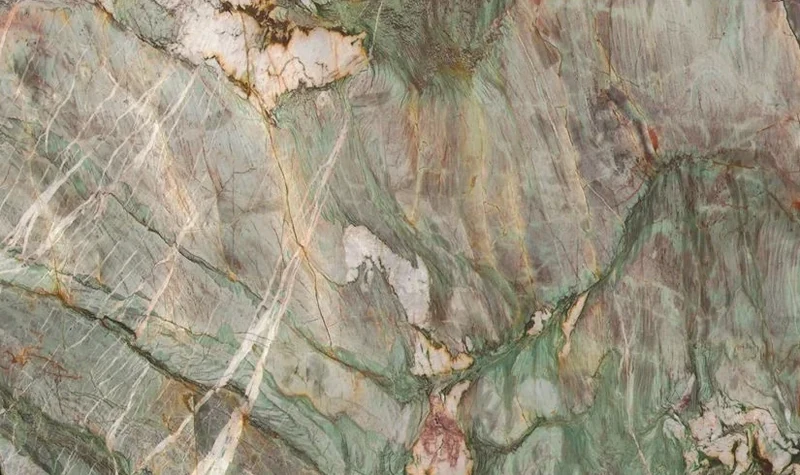
Green Peacock
The current reference shows muted sage green, warm ivory and touches of ochre and rose, with broad bands and fine crossing veins. On a compact tray or display base, discuss which features should remain visible after cutting and recessing. Review natural fissures and remaining sections on the proposed sample.
Fendi White
The library reference shows cool white and pale grey with darker linear accents. For a carved box or thicker object, confirm the actual material thickness and whether the proposal uses solid stone or an agreed bonded construction. A calm colour direction does not mean identical veining across an order.
Golden Blue Onyx
The current reference shows pale blue-green, cloudy white and soft gold with fine golden lines. Assess translucency, thickness and edge strength on the selected material rather than assuming a backlit effect. A decorative or candleholder concept does not establish heat or fire safety; the intended assembly and use need separate review.
Use the guide to stone colour and veining expectations to agree an appearance range instead of treating one photograph as a repeatable pattern.
Edge profiles and finishes: specify what can be checked
Chamfers, bevels and eased edges
A 45-degree bevel is a drawing choice, not a universal solution. State the proposed angle, bevel width, corner transition and remaining edge section. Review the sample for unwanted sharpness, chips and consistency at the intended object scale. The selected stone and geometry determine the suitable processing approach; one machine type is not mandatory for every profile.
Honed and polished surfaces
A honed finish has a more matte appearance, while a polished finish reflects more light. Neither description establishes resistance to staining or acid attack. Compare the proposed finish on the selected stone, including recesses and edges, under the lighting in which the object will be used.
Machining and hand finishing
Machining and hand finishing may be combined to produce the approved form. Neither removes the need to measure functional details or review natural variation. Agree measurable acceptance criteria and sample references rather than expecting absolute geometric identity.
For a focused edge brief, read chamfering and edge finishing for small stone accessories.
Planning a small-batch or low-MOQ enquiry
A smaller order can let a brand review a design before extending a collection, but feasibility depends on material availability, geometry, processing, finish and packing. DeHong Stone evaluates quantity by project; this article does not promise a fixed minimum, stock availability, price or delivery date.
List quantity separately for each design, size and colour direction. If you want mixed styles or consolidated packing, ask which combinations are feasible and how they affect sampling, identification and the quotation. Review small-batch stone manufacturing for a more detailed comparison of quotation inputs.
Part II: Stain resistance and etching are different questions
Stone composition, surface finish and treatment affect care requirements. An absorbed spill can cause a stain; an acid can also alter a sensitive stone surface, leaving a dull etched area. These effects should not be treated as the same problem.
What an impregnating treatment can do
The Natural Stone Institute care guidance explains that impregnating treatments improve stain resistance rather than making stone stain-proof; some stones may not need sealing. Choose a treatment for the actual material and use, following its application and curing instructions.
LATICRETE's surface-care FAQ distinguishes protection against water- or oil-borne staining from acid etching: a penetrating sealer does not prevent etching. Do not interpret water beading as proof of acid resistance.
Check the intended contact and cleaning routine
Before approval, ask which treatment is proposed, whether it changes the appearance and what evidence supports the intended use. For food-contact applications, request applicable documentation for the complete finished item, including any treatment, adhesive or liner. Do not assume that a natural material or a generic product description establishes food safety.
For routine care, use a suitable neutral cleaner and soft cloth, follow the product instructions, then rinse and dry appropriately. Blot spills promptly. Avoid acidic cleaners on acid-sensitive stone. For unidentified marks or etched areas, seek material-specific advice rather than experimenting with harsh chemicals. These general principles follow the Natural Stone Institute guidance linked above.
Review bottle bases, protective pads and cleaning access on the actual sample; proposed pads also need compatibility checks. The existing oil-stain and marble display-base care guide covers this subject in more detail.
Part III: Packaging for a heavy, fragile object
Review the packed product as a separate design problem. A polished surface, thin edge or separate stone lid can be vulnerable even when the main body looks substantial. Packing needs to suit the actual item, shipment method and destination handling.
- Keep components apart. Protect lids and bodies from direct contact and agree how matching pieces remain identifiable.
- Support the geometry. Discuss cushioning and movement control around recesses, corners and projections. EPE foam or other materials may be considered, but material type and thickness need confirmation for the specific pack.
- Review the complete shipping unit. Include the inner protection, presentation packaging, outer carton and any pallet or crate arrangement.
- Record actual measurements. Use the packed sample for weight and dimensions before confirming transport options.
- Agree validation separately. Define any required handling or transit test and retain the actual result. A packing photograph or the use of foam is not evidence that a drop test has passed.
Courier, consolidated freight and LCL may be options for discussion, depending on the shipment. Availability, cost, delivery terms and timing are confirmed separately; no packing method can be described as eliminating all transit damage. See the small stone object packing and shipping-damage checklist.
A single brief for design, care and packing
Before requesting a quotation, assemble the intended use, drawings, usable dimensions, material direction, finish, quantity by design, proposed protection, packaging needs and destination. Identify what is already agreed and what still needs a sample or documented check. This makes it easier to compare proposals without confusing a design concept with a validated product.
Send the brief to DeHong Stone at hefeng@dehongstone.com or WhatsApp +86 139 8660 4493. You are welcome to use WhatsApp for the initial discussion. Visit www.dehongstone.com to review the current product and material references.
Natural stone tabletop object buying questions
Can DeHong Stone quote a small custom order from a reference image?
Send the image with intended use, dimensions, material direction, quantity and packing requirements. Feasibility and minimum quantity are evaluated for the particular design and confirmed with the quotation; an image alone is not a complete manufacturing specification.
Does sealing make a marble tray stain-proof or acid-proof?
No. A suitable treatment may improve stain resistance, but it does not make the stone stain-proof. A penetrating sealer does not prevent acid etching on a sensitive stone.
Will every piece match the material photograph?
No. Review the selected material and physical sample, agree an acceptable range of colour and veining, and identify any faces or features that matter to the design.
Does protective packaging mean a drop test has been passed?
No. Agree any required validation separately and retain its actual result. A packing photograph, foam insert or reinforced carton alone is not proof of a completed transport test.
Apply the guidance to your project
For a project-specific review, send your intended use, drawing or reference, dimensions, material preference, estimated quantity and delivery destination to DeHong Stone. The team can review which details need sample confirmation before quotation.
Website: www.dehongstone.com
Email: hefeng@dehongstone.com
WhatsApp: +86 139 8660 4493
General purchasing guidance is not a project quotation or a material test result. Confirm specifications, verification and terms for the selected sample.
Bring your drawing and project requirements.
Include your intended use, reference, dimensions, material preference and quantity. Agree the feasibility review and sample requirements in writing.