Can “a Single Drop of Oil” Ruin a Marble Tray Forever?
TL;DR: An oil mark does not automatically mean a stone object is permanently ruined, and a mark does not by itself prove the maker omitted sealing. Identify the stone and the type of change first. Absorbed oil, temporary moisture darkening, surface residue and acid etching need different responses. A suitable impregnating treatment may improve stain resistance, but it does not make stone stain-proof or prevent acid etching. Match the object to its real use and assess a representative finished sample before a larger order. [3][4]
Published
Updated
The disappointment behind the question
A small marble tray looks ideal beside a perfume bottle. After several days, a ring appears beneath it. The owner assumes the stone has failed. A supplier replies that all natural stone is porous. Neither explanation identifies what happened, so neither tells the owner what to do next.
For commercial buyers, the same uncertainty becomes an operating issue. A hotel may need housekeeping instructions. A fragrance brand may need a base that tolerates incidental contact with its actual product. A retailer needs product descriptions that do not promise more than the material can deliver.
Start by separating appearance, treatment and use. A polished surface can look closed and glossy without being a protective barrier. A honed surface can look softer without automatically absorbing more than every polished alternative. The chosen stone and its finished condition matter more than the marketing adjective.
Identify the mark before trying to remove it
A darker area after wet contact may indicate absorbed moisture, but a ring cannot be diagnosed by shape alone. A dark persistent mark may involve oil or other staining material. A dull patch visible in reflected light may indicate etching, while a cloudy layer may be residue on top of the surface. More than one condition can occur together.
These distinctions matter because cleaning the surface cannot reverse every change within the stone. Likewise, adding sealer over an existing problem is not a universal repair. Acid-sensitive stones can lose surface finish when exposed to acidic substances; conventional impregnating sealers do not prevent that reaction. [4]
Do not assume that pure water caused an etched ring simply because a wet bottle was involved. Residue on the bottle, spilled contents and cleaning products may also be relevant. Take photographs, record what touched the stone and seek material-specific advice when the cause remains unclear.
Define the intended contact and use
Supplied product photographs for discussing form, arrangement and visible appearance. Confirm stone identity, dimensions and suitability for your project through sample review; these references are not a stock catalogue or a customer delivery case.
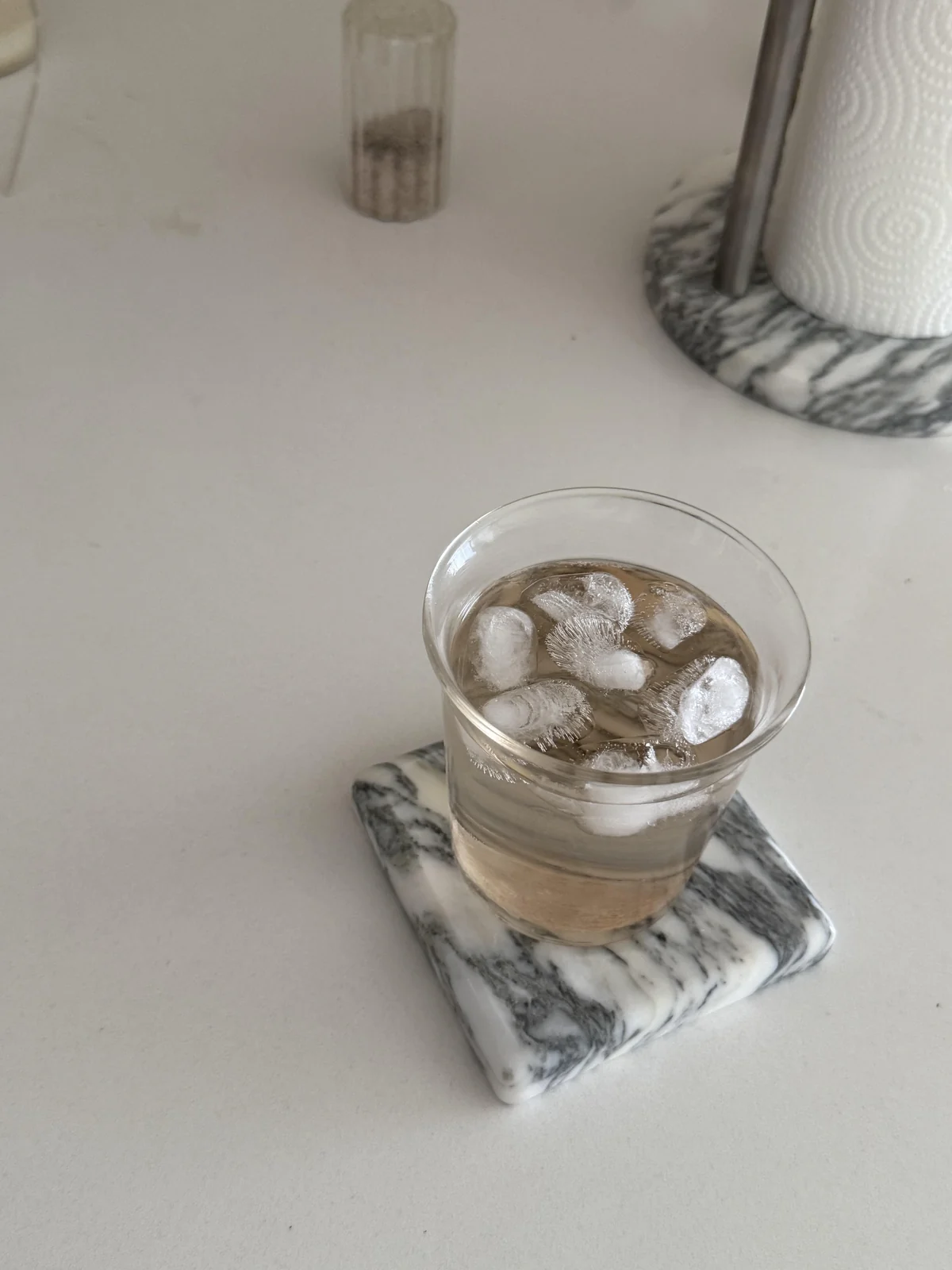
Specify resistance around the intended use
For a jewelry tray used in a dry dressing area, the exposure profile may be relatively simple. A bathroom organizer can encounter water, soap and cosmetics. A fragrance display may encounter the actual perfume or diffuser formulation. These should not be treated as interchangeable scenarios.
For a project sample, list the substances reasonably expected in use, the proposed contact duration, the cleaning method and the observation points after cleaning and drying. Use a spare sample with permission: exposure trials can intentionally mark a surface. A casual household check is not a certified performance test.
For wholesale approval, photograph the sample before and after the agreed evaluation under comparable lighting. Define the acceptable outcome in advance. “Easy to clean” becomes more meaningful when it refers to a particular substance and process, rather than an undefined promise that every spill will disappear.
Understand what sealing can and cannot do
Ask what treatment, if any, is proposed for the selected stone; whether it changes color or sheen; how application and curing are controlled; and what maintenance the product manufacturer recommends. Some stones may not require impregnation for the intended application. Others benefit from a suitable treatment. [3]
Do not judge quality by how many coats are claimed. A compatible product, correct application and appropriate curing matter more than a dramatic number. Nor does a visible water bead establish resistance to every oil, cleaner or fragrance formulation.
A topical coating is a different surface system from a penetrating treatment. If proposed, assess appearance, abrasion, adhesion, chemical compatibility and future repair. Do not call any surface “food-safe” merely because the base material is natural; direct food-contact claims require evidence for the complete finished product and intended use.
Compare the possible explanations
| Appearance | Possible explanation | Useful next step |
|---|---|---|
| Darkening after wet contact | Moisture absorption or another deposited substance | Record exposure and assess after drying |
| Persistent dark oily patch | Absorbed oil or other contamination | Seek stone-specific stain assessment |
| Dull patch in reflected light | Possible etching or finish change | Avoid repeated aggressive cleaning; assess finish |
| Cloudy film | Cleaner residue, treatment residue or another deposit | Identify the product and approved removal method |
| Repeated marks beneath bottles | Ongoing exposure or trapped moisture/residue | Review both care and the display arrangement |
These are screening possibilities, not diagnoses from photographs. The appropriate response depends on the actual stone, treatment and exposure history.
Build a realistic daily care routine
Use a soft cloth and a cleaner suitable for the identified stone. Follow the supplier's directions, remove spills promptly and dry the surface. Avoid improvising with vinegar, lemon, abrasive powders or mixtures of household chemicals. Keep the underside and the supporting furniture dry as well. [3]
Consider separating vulnerable stone from regular wet contact with a suitable removable barrier, provided its own material does not mark or trap moisture against the stone. Check beneath bottles and accessories during normal cleaning. If a display constantly receives drips, changing its operating arrangement can be more useful than repeatedly reapplying treatment.
When a mark persists, report the substance, approximate contact time, cleaner used and treatment history. A qualified stone-care professional can advise whether targeted stain removal or surface refinishing is appropriate. Some conditions can improve, but promising complete restoration without assessment is no more helpful than declaring the piece ruined forever.
Give the operating team a usable handover
A good sample result can be undermined by the wrong cleaning routine. Before a stone accessory enters a hotel, shop or showroom, decide who will maintain it and what products they use. A brief care instruction attached to the product specification can be more useful than a long generic statement about natural materials.
List the approved cleaner, cleaning method and the response to a spill. Explain when the item should be lifted to clean and dry beneath it. If a protective liner is part of the arrangement, include its removal and replacement process. Keep the instructions realistic for the staff responsible for the display.
For a fragrance counter, consider what happens during product demonstrations rather than only when bottles remain closed. For a bathroom organizer, consider repeated wet handling. For a jewelry tray, consider whether creams or cosmetics are placed nearby. These exposure patterns help define a relevant sample evaluation.
When a problem appears, keep a simple incident record: product identifier, substance, estimated contact time, cleaning already attempted and photographs. This helps the supplier distinguish a new exposure issue from a recurring material or care problem. It also avoids an escalating sequence of improvised cleaners that can make assessment harder.
Discussing stone suitability with DeHong Stone
DeHong Stone's custom natural stone projects can begin with the intended use rather than a fixed product photograph. Share the object you want to develop, its dimensions, quantity and the liquids or products likely to contact it. Include any cleaning constraints from your hotel, retail or brand team.
Ask to confirm the proposed stone, finish, any treatment and the sample evaluation method before the production specification is finalized. Compatibility with a particular perfume, oil or cosmetic cannot be established merely by naming marble. If documented performance is required, identify the assessment scope and acceptance criteria early.
For example: “This base will support our fragrance bottle in a shop. Incidental contact with the product is possible, and staff use the following cleaner. Please discuss a suitable sample and how we can evaluate the finished surface.” That is more actionable than requesting an undefined stain-proof material.
The objective is an appropriate natural stone object with clearly understood use and care requirements. Specific treatment, testing and documentation arrangements remain project matters to agree in the quotation, not assumptions created by a general article.
FAQ
FAQ 1: Does an oil stain prove the tray was never sealed?
Answer: No. Treatment performance, stone characteristics, contact time and the substance all matter. The mark alone cannot establish the production history.
FAQ 2: Will sealing stop lemon juice from etching marble?
Answer: A conventional impregnating sealer does not prevent acid etching. Reducing absorption and protecting an acid-sensitive surface from chemical reaction are different tasks. [4]
FAQ 3: Should I reseal every few months?
Answer: There is no universal schedule for all small stone objects. Follow the treatment manufacturer's instructions and the actual material and use conditions.
FAQ 4: Can a marble fragrance base be used commercially?
Answer: Potentially, with an appropriate specification. Evaluate the actual finished sample against the intended products and cleaning routine; do not infer compatibility from a styled photograph.
FAQ 5: How should I describe my project to DeHong Stone?
Answer: At www.dehongstone.com, provide dimensions, quantity, stone preference and the substances likely to contact the object. Ask for a sample evaluation plan and written care guidance appropriate to the proposed finish. Treatment and performance requirements need project-specific confirmation.
Technical references
[3] Natural Stone Institute — Care & Cleaning of Natural Stone
[4] Use Natural Stone — A Scientific Guide to Shopping for Natural Stone
For a perfume display, review the intended bottle contact and cleaning routine alongside the Halo Disc display-base reference before choosing the finish.
Apply the guidance to your project
For a project-specific review, send your intended use, drawing or reference, dimensions, material preference, estimated quantity and delivery destination to DeHong Stone. The team can review which details need sample confirmation before quotation.
Website: www.dehongstone.com
Email: hefeng@dehongstone.com
WhatsApp: +86 139 8660 4493
General purchasing guidance is not a project quotation or a material test result. Confirm specifications, verification and terms for the selected sample.
Bring your drawing and project requirements.
Include your intended use, reference, dimensions, material preference and quantity. Agree the feasibility review and sample requirements in writing.