Why Does Stone Decor Arrive “Broken and Chipped Right Out of the Box”?
TL;DR: A stone object and its packaging need to be developed together. Thickness alone does not prevent breakage, and a neat gift box does not establish transport protection. Start with vulnerable geometry, support the object without loading its thin edges, separate pieces, and evaluate the complete packed product for its intended delivery route. Agree on arrival inspection and damage handling before shipment. No packaging can honestly guarantee zero breakage in every possible journey.
Published
Updated
Record what the shipping sample actually proves
A shipping-damage rate needs a defined shipment and inspection record. A workshop photo or one intact sample cannot establish a percentage for future deliveries. Use a written record to compare pack revisions and decide what to change.
Before dispatch
Record the product and pack revision, quantity, measured packed weight, carton dimensions, internal support and intended route. Photograph the pack before closing it.
On receipt
Record inspected units and damaged units separately. Photograph the outer pack, cushioning and product condition, and describe where chips, cracks or abrasion occurred.
Before the next batch
Review the likely failure location, proposed packing change and repeat-check method. Keep the original and revised records so the comparison uses the same definitions.
No breakage percentage or test certification is claimed here. Agree the inspection scope and any transport testing for the actual packaged product.
Download the blank sample-review worksheet ↗Why a small object can create a large problem
A customer opens a new tray and sees a missing corner. A retailer unwraps a display base and finds a line across the underside. Even when only one piece is affected, the cost extends beyond the stone: replacement freight, inspection time, missed displays and uncertainty about the remaining stock.
It is tempting to diagnose the problem from the carton alone. Yet a broken object can reflect manufacturing damage, inadequate internal support, movement inside the box, a severe transport event or several factors together. A damaged outer carton is useful evidence; an apparently intact carton does not prove that its contents avoided shock.
The objective is to build a repeatable protection system and collect evidence when it fails. “Handle with care” is an instruction, not an engineered substitute for cushioning and restraint.
Begin with the vulnerable parts of the design
Review narrow rims, sharp corners, deep recesses, long projections and transitions between thick and thin areas. Their suitability depends on the selected stone, dimensions, natural features and intended handling. There is no single safe minimum thickness for every marble, travertine or decorative stone object.
An edge can look refined without ending in a fragile knife profile. A modest radius, chamfer or revised recess may improve handling, but any change must be shown in the drawing and approved sample. Quietly thickening the entire object after approval can solve one concern while creating a new appearance complaint.
Check finished pieces before packing. Document visible faces, edges and bases. A suspected crack deserves assessment before shipment; it should not be relabeled as a natural vein without examination. Photographs help establish condition, although they cannot reveal every internal weakness.
Design protection around the whole object
Use a clean, nonabrasive contact layer, then cushioning that supports the object in appropriate areas. Thin rims should not become the main points carrying compression. For a recessed tray, support arrangements need to account for both the broad base and the raised edges.
The object should not rattle, but restraint must not squeeze vulnerable details. A tightly cut insert is not automatically safe: poor fit or excessive pressure can concentrate loads. Select the cushioning material, fit and thickness as a system rather than assuming a particular foam is always best.
Pack multiple pieces separately so stone cannot strike stone. Keep accessories from migrating into a finished surface. Consider how the customer removes a heavy item: an attractive insert that forces someone to pull on a delicate rim creates risk during unpacking.
For fragile parcels, carrier guidance commonly discusses double boxing and generous cushioning. FedEx provides a double-boxing recommendation for breakables, but this is general guidance, not a product-specific validation of any stone design. Dimensions and materials should be checked against the actual packed object and chosen service. [1]
Test the package you actually plan to ship
A showroom box, an export carton and a palletized shipment experience different conditions. Choose an evaluation appropriate to the route, total weight, package shape and distribution method. ISTA Procedure 3A concerns packaged products in parcel delivery; it is one possible reference to discuss with a packaging specialist or laboratory, rather than a universal prescription. [2]
Test the complete production-intent combination: object, surface wrap, inserts, inner box, outer box and closure. Record the configuration and inspect the product afterward. A demonstration with a different object or extra cushioning does not validate the proposed shipment.
For a pilot order, track damage by product, packaging version and route. If damage repeats at the same corner, review support and geometry. If pieces collide, review separation and restraint. Retest when relevant design or packaging changes affect the original evaluation. A single successful delivery is encouraging, but it is not a measured long-term breakage rate.
Compare the purchasing approaches
| Question | Packaging chosen at dispatch | Packaging included in development |
|---|---|---|
| Delicate edges | Wrapped after production | Reviewed with the design |
| Internal support | Chosen by appearance | Matched to weight and geometry |
| Multiple items | Share open space | Separated and restrained |
| Validation | A sample arrived once | Defined configuration and route-appropriate evaluation |
| Damage response | Discussed after a problem | Evidence and responsibility agreed in advance |
Make arrival inspection straightforward
Agree on what the buyer should inspect and when a damage report is due. Ask them to retain the carton, inserts and labels while the issue is assessed. Useful evidence includes the outer package, the unopened internal arrangement where possible, the affected item and close views of the damage.
An unboxing video can help establish the sequence, but it should not be presented as the only possible evidence unless the agreed terms require it. Avoid using or attempting to glue a structurally damaged piece before the supplier has assessed it. Surface repairs can alter both appearance and the evidence needed for a claim.
A practical order brief should request a proposed packaging structure, packed dimensions and weight, inspection criteria, and the process for investigating damage. Put replacement arrangements and transport responsibilities in the commercial agreement. A product article cannot replace the agreed sales terms.
Plan for the second journey, not only the factory shipment
A wholesale order may arrive safely on a pallet and still encounter damage later when a retailer sends individual pieces to customers. The original transport package and the final customer parcel are different systems. Tell the supplier whether the item is going directly to a display site, into a warehouse or through another parcel network.
For reshipment, identify the unit pack that must remain with each product, the cushioning added at fulfillment and any instructions needed for repacking. A retail presentation box may be only one layer of the final shipping arrangement. If warehouse staff must improvise, the protection can change from order to order.
Also consider returns. A customer may not know which insert supports a thin rim or how to orient the tray. Straightforward unpacking and repacking instructions can help preserve the intended arrangement, although they cannot replace suitable packaging. Check that the product can be removed without tools that might strike the stone.
Record packed dimensions and gross weight for each proposed configuration. This makes freight estimates and warehouse planning more reliable. Compare cost at the level of the delivered order, including damage handling and replacement effort, rather than choosing solely by the price of the insert.
Discussing packaging with DeHong Stone
For a DeHong Stone wholesale or OEM inquiry, send the product reference, approximate dimensions, quantity, destination and intended shipping or fulfillment route. Identify delicate details and tell us whether the product will be sold as a single piece, a pair or a coordinated set.
Ask to include the packaging proposal and the required evaluation scope in the quotation discussion. A particular foam, box structure or laboratory test should not be assumed to be included unless it is specified. Testing arrangements, sample quantities and costs need agreement for the actual project.
A useful request is: “Please assess packaging for individual customer delivery as well as the first wholesale shipment. Show how each item is restrained, how thin edges are protected and how the buyer removes it.” Include any retailer labeling or carton requirements at this stage.
The goal is a practical, documented arrangement that fits the product and route. Production quality, packaging design and transport responsibility should be discussed together, while the final allocation of cost and risk remains governed by the agreed commercial terms.
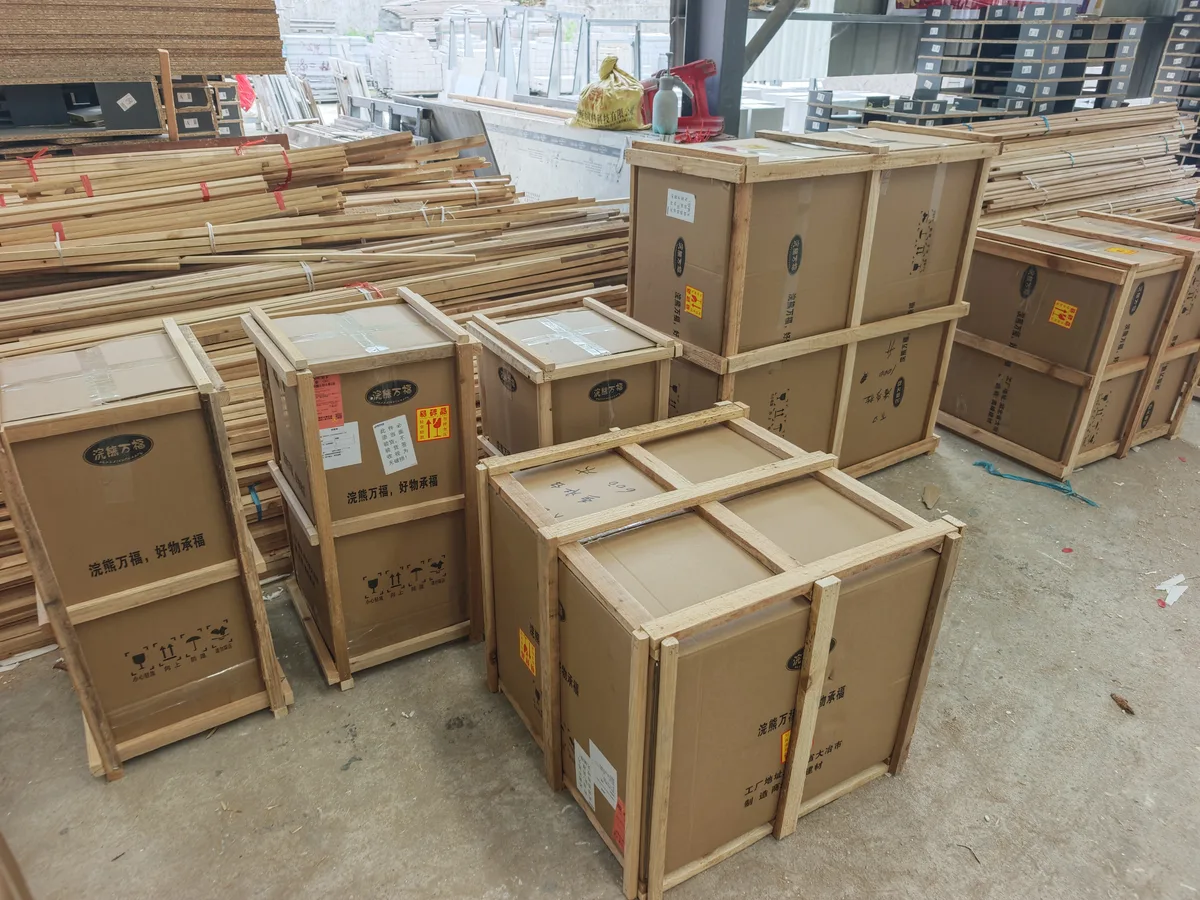
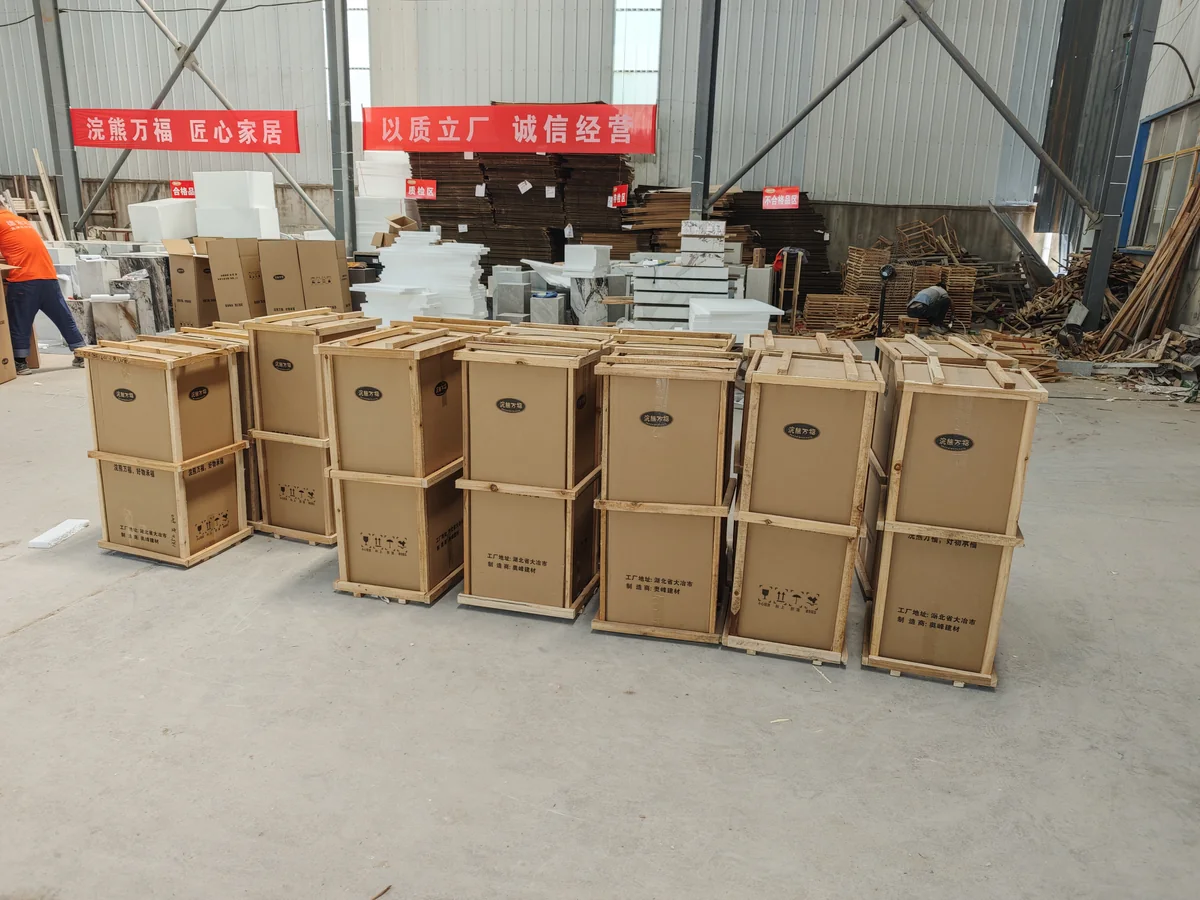
Workshop packaging context
FAQ
FAQ 1: Is bubble wrap always inadequate for stone?
Answer: No. Performance depends on the entire packaging design, material, restraint and handling conditions. A thin layer alone may be insufficient, but naming one cushioning material does not determine the outcome.
FAQ 2: Should every stone tray be made thicker?
Answer: No. Thickness is one design variable. Material selection, edge profile, span, support and packaging also matter. Compare approved prototypes rather than applying a universal thickness rule.
FAQ 3: Does a natural fissure mean a product will break?
Answer: Not necessarily. Its position and effect on the finished object need assessment. A photograph alone may not reliably distinguish a harmless feature from damage.
FAQ 4: Does “ISTA tested” guarantee safe arrival?
Answer: No. Ask which procedure, configuration and report apply. A test result concerns a defined package and conditions, not every future shipment or a modified product.
FAQ 5: What should I send DeHong Stone for a packaging discussion?
Answer: Share the product drawing or reference, dimensions, quantity, destination, expected shipping method and whether the pieces will be reshipped individually. Request a project-specific packaging proposal through www.dehongstone.com; testing scope and any associated costs need separate confirmation.
Technical references
Use the dimensions and separate lid of the Round Vault box reference to brief the proposed packing, then measure and test the actual packed sample as agreed.
Apply the guidance to your project
For a project-specific review, send your intended use, drawing or reference, dimensions, material preference, estimated quantity and delivery destination to DeHong Stone. The team can review which details need sample confirmation before quotation.
Website: www.dehongstone.com
Email: hefeng@dehongstone.com
WhatsApp: +86 139 8660 4493
General purchasing guidance is not a project quotation or a material test result. Confirm specifications, verification and terms for the selected sample.
Bring your drawing and project requirements.
Include your intended use, reference, dimensions, material preference and quantity. Agree the feasibility review and sample requirements in writing.