Why Small-Batch Stone Manufacturing Differs from Architectural Stone Production
Small-batch stone objects need a manufacturing plan built around individual geometry, visible surfaces, handling and packaging, not simply a smaller version of a building-stone order. Material selection, setup, edge finishing and inspection can dominate the work even when little stone is consumed. Buyers get a more useful quotation by defining functional features and acceptable variation early, then validating a prototype before fixing the production specification.
Published
Updated
Compare quantity quotes on the same basis
A useful comparison keeps the design and acceptance requirements stable. Ask for a sample quote and relevant batch quantities, then separate development work from the repeated production and shipping items.
Keep the product definition stable
Use the same drawing revision, stone direction, finish, logo, unit definition and packaging brief for each quantity option. State the intended use and undecided details.
Separate the cost lines
Ask the written quote to identify sample or tooling charges, product quantities and unit basis, packaging, freight and applicable delivery terms. Confirm exclusions and quote validity.
Approve the release conditions
Record the sample decision, permitted material variation, agreed batch checks and packing approval before production. Revisit the quote when a significant requirement changes.
Quantity choices are review points, not an automatic discount schedule. Final MOQ, sample fees, prices and dates are confirmed in writing.
Download the blank sample-review worksheet ↗Small dimensions do not mean simple production
An architectural panel may cover a large area, while a desktop accessory fits in one hand. That comparison says little about the number of operations. A small object may have a recessed interior, narrow rim, drilled opening, curved perimeter and finished underside. Each feature can affect how the workpiece is held, approached, inspected and protected between operations.
The comparison is not that architectural stone is easy. Building applications have their own structural, installation and exposure requirements. The difference is the production unit and its acceptance criteria. A desktop object is often handled closely and viewed from several directions. A scratch on its underside, an uncomfortable edge or a rocking base may matter to a buyer even when the primary dimensions appear correct.
The Natural Stone Institute’s publication library includes application-specific design and fabrication guidance. Its architectural context is useful background, but a building-stone specification should not be copied unchanged into a small accessory brief. Define what this particular object needs to do.
Material yield is a design decision
A material quotation needs more than the trade name and finished dimensions. Vein direction, acceptable tonal variation, resin or mesh treatment, natural features and the thickness required before machining all influence selection. A photograph of one attractive sample cannot describe every piece available for production.
Consider a set of four objects displayed together. The buyer may accept natural variation between sets while requesting a coordinated appearance within each set. That is a different selection task from accepting all pieces independently. State the distinction explicitly. Otherwise the supplier may quote one interpretation and the buyer may inspect against another.
Cutting a small shape from a larger piece also requires allowance for processing and rejection. It is misleading to price only the volume remaining in the finished object. Likewise, leftover material is not automatically suitable for any miniature product: thickness, fissures, reinforcement, appearance and traceability still need consideration. Discuss material selection before treating a particular colour family as a guaranteed repeatable supply.
Setup work changes the economics of a short run
Before repeat production, a design may require a working drawing, a process sequence, trial holding arrangements and a sample finishing approach. These activities are related to the design rather than simply to the number of pieces. Spreading them across a short run has a different commercial effect from spreading them across a long, unchanged run.
This is why an additional quantity tier should be assessed rather than assumed to earn a fixed discount. A higher quantity may improve repetition, but changes in material availability, sorting requirements or packing configuration can also affect the offer. Request comparable quotations against the same revision and identify exactly what changes between tiers.
A useful cost discussion separates material selection, development or setup, repeat processing, finishing, inspection and packaging. This is a framework for understanding a quotation, not a published DeHong Stone cost formula. No universal percentage describes the contribution of each category across different stone designs.
Geometry determines the process more than the product name
Calling an item a “base,” “holder” or “decorative accessory” does not define its manufacturing difficulty. Ask which surfaces are functional, which are visible, and which features can tolerate variation. A blind hole near an edge, a thin wall or a narrow bridge may deserve more attention than a much larger flat face.
Where a design combines stone with a metal or wood component, the mating interface requires its own review. The external component’s dimensions, attachment method, movement and replacement requirements influence the stone detail. Do not assume the stone workshop supplies or validates every accessory. Establish responsibility for sourcing and testing before treating the assembly as a finished solution.
Changing a feature can have consequences beyond machining. A wider radius may alter the visual character; a different recess may change cleaning access; a modified underside may affect stability. A good design review explains these trade-offs to the buyer instead of silently simplifying the drawing to make production easier.
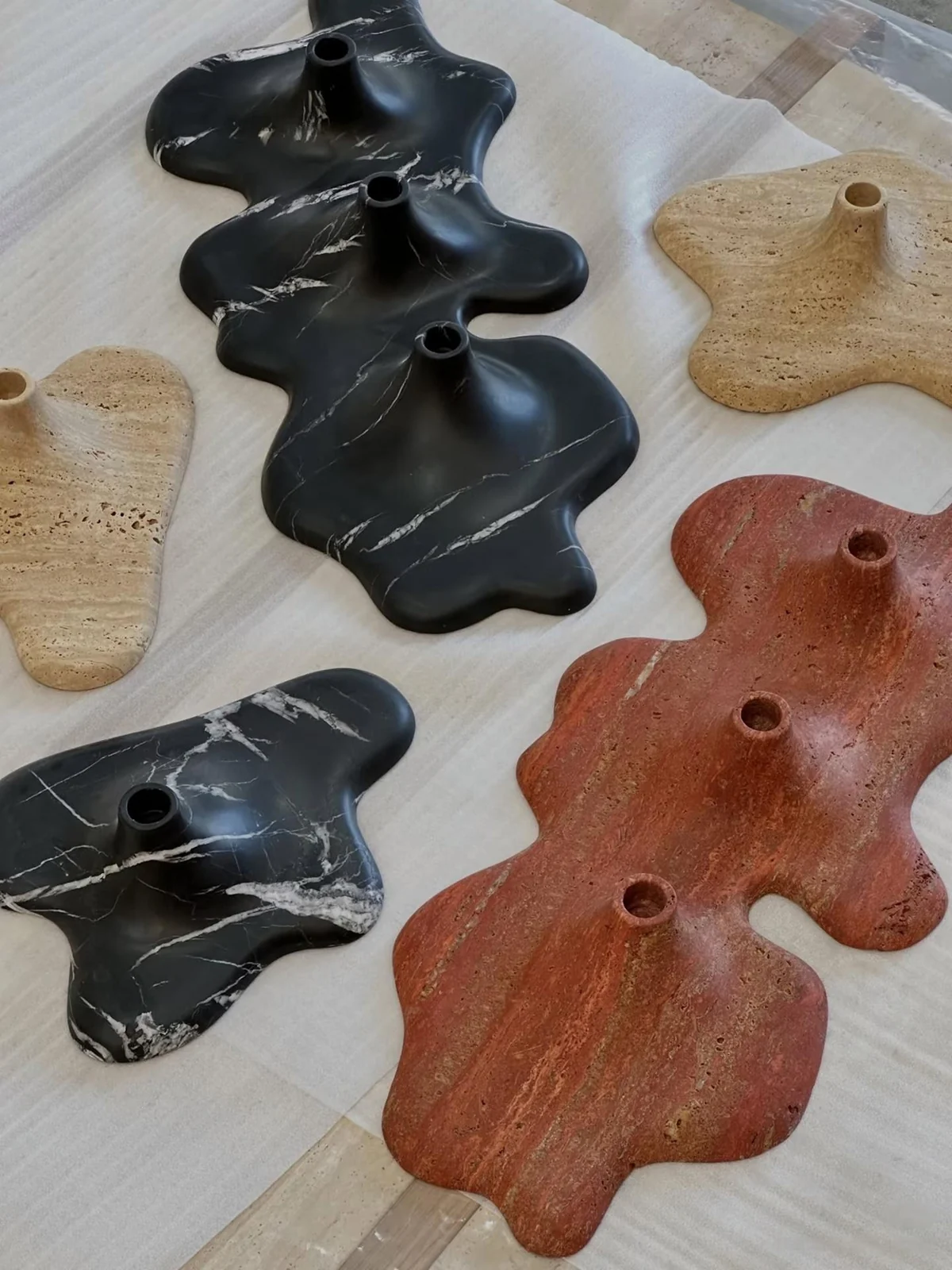
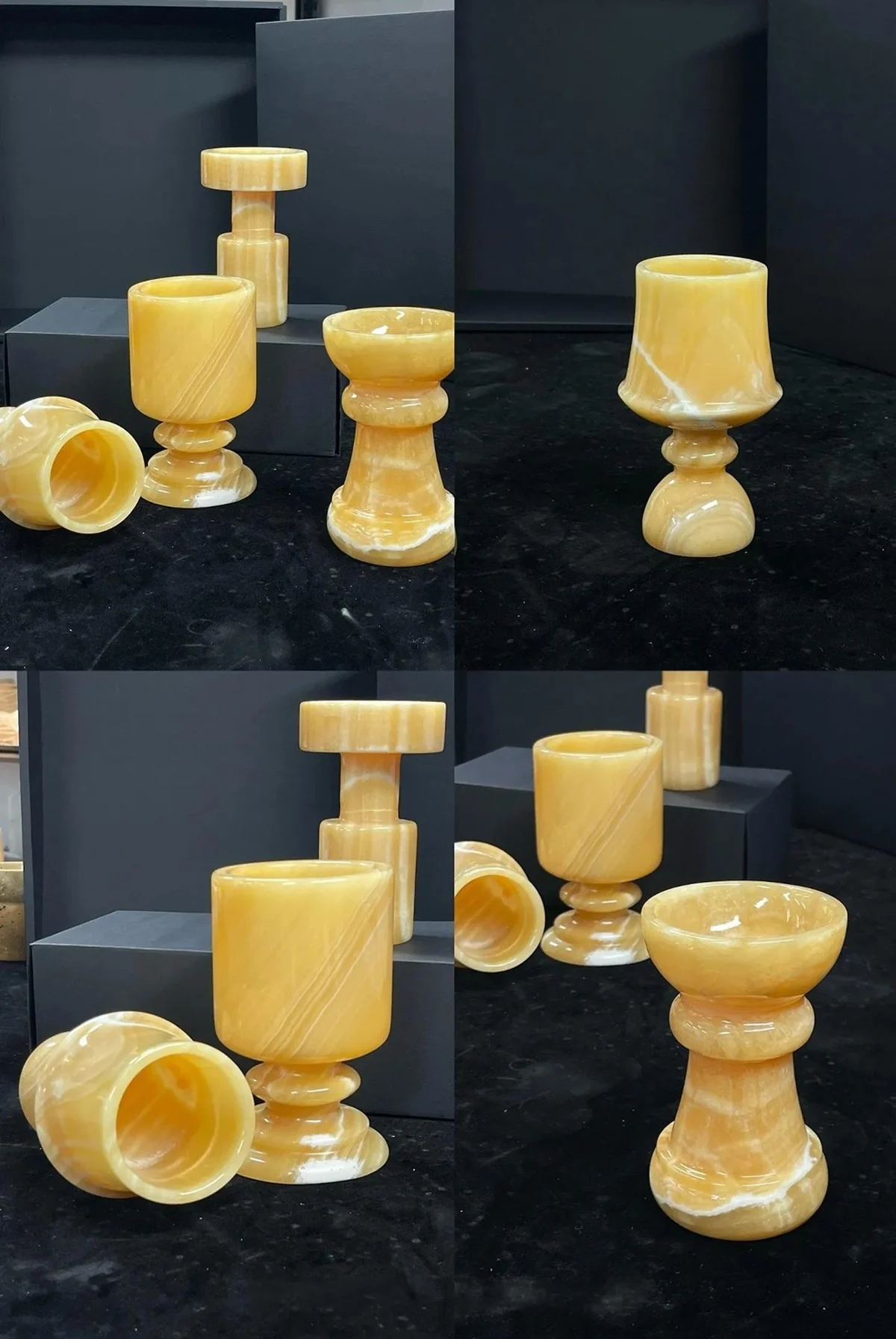
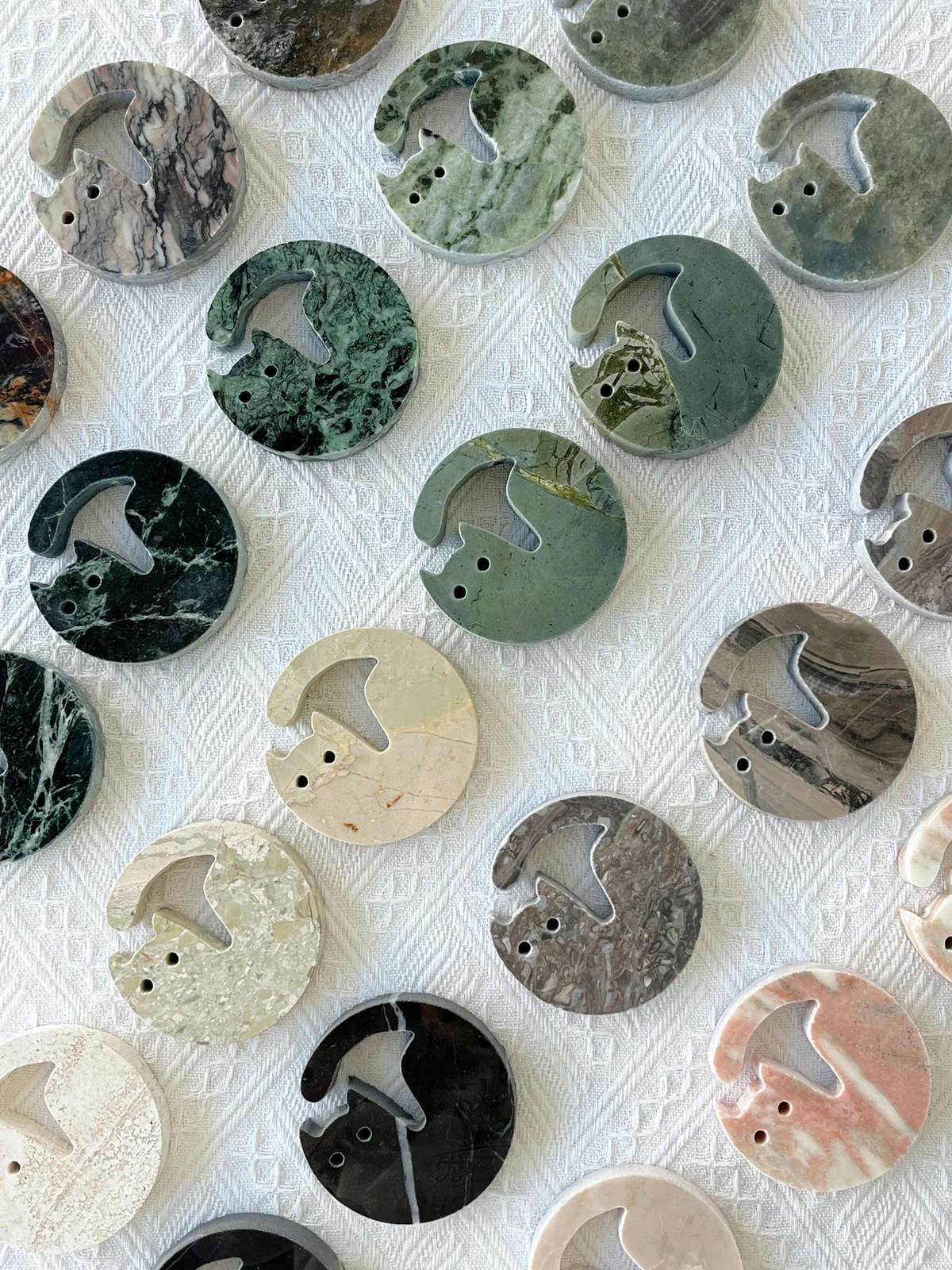
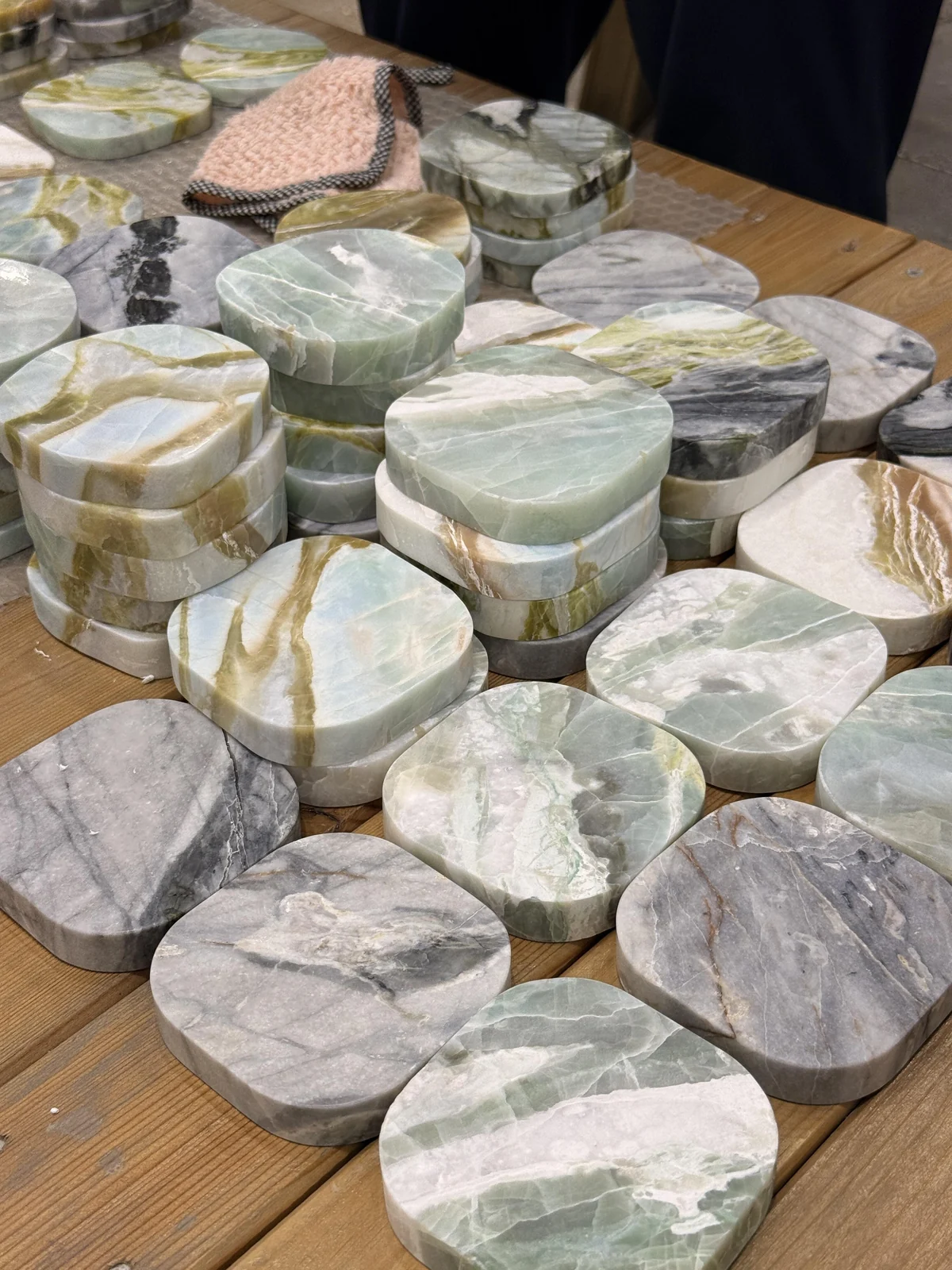
Shape and component references for a small-batch brief
Supplied product photographs for discussing form, arrangement and visible appearance. Confirm stone identity, dimensions and suitability for your project through sample review; these references are not a stock catalogue or a customer delivery case.
Define precision where it serves a purpose
A blanket statement such as “high precision throughout” does not tell an inspector what to measure. Identify the features that control fit, stability or alignment, and give them agreed limits. Separate these from cosmetic expectations such as vein orientation, edge appearance and colour range.
For example, a recess receiving a purchased component needs a fit decision based on both parts, while a decorative outside contour may have a different acceptance method. The illustrative comparison does not establish a particular clearance or tolerance. Those values must follow the chosen materials, function, process and trial evidence.
The Natural Stone Institute’s webinar description highlights the importance of clear dimensional specifications in stone work. For small objects, add an agreed measurement method and reference surfaces. A number written on a drawing is incomplete if different people measure from different edges or use tools that cannot resolve the required difference.
Use the prototype to settle decisions
A prototype should answer defined questions: Is the object comfortable to handle? Does the mating component fit? Is the selected finish appropriate? Can the stone features be reproduced within the agreed appearance range? Which changes are necessary before ordering a batch?
Keep a revision record. Photographs are useful, but they do not replace dimensions or written acceptance criteria. Record the material selection, finish, approved drawing revision, required changes and any remaining tests. If the buyer changes the geometry after approval, explain which previous observations remain relevant and which need another check.
Avoid treating a single attractive sample as proof of all production outcomes. Repetition, material variation and packaging introduce additional questions. The decision to proceed should distinguish approved design features from characteristics still requiring evaluation. This makes the sample a practical reference rather than a marketing promise.
Packaging belongs in development
An individual accessory may need a protective contact layer, shaped support, a presentation box and a shipping enclosure. Its packaging volume can be significant relative to the product. Fragile projections or detachable components may change the layout substantially. These details affect handling and the information required for a shipping quotation.
Discuss whether goods travel as single parcels, master cartons or consolidated pallet loads. ISTA’s packaging design and test guidance differentiates distribution environments; one arrangement should not be assumed suitable for every route. Testing and actual receiving feedback can help identify whether a package protects the agreed product configuration.
For a small run, avoid designing a presentation box in isolation and discovering later that the transport pack requires a completely different size. Share branding and receiving requirements early, but keep unverified claims about protection, recyclability or damage rates out of the specification.
Prepare a brief that makes quotations comparable
Start with the intended use and the people who will handle the object. Add a dimensioned drawing or reference images, preferred stone family and finish, quantities to evaluate, visible faces, critical interfaces and expected shipping destination. Where something is undecided, identify it as an option rather than leaving the supplier to guess.
Include a simple approval sequence: design review, material selection, prototype evaluation, specification confirmation and production decision. Define who approves changes and how those decisions are recorded. Written comments tied to a drawing revision are easier to use than scattered messages such as “make it slightly softer” without identifying an edge.
Ask suppliers to state assumptions and exclusions. Is a purchased fitting included? Does the quote cover an individual box? What sample or testing work is separate? These questions support a meaningful comparison without imposing a fixed minimum quantity, lead time or production capability that has not been assessed.
Develop a small stone object around your requirements
DeHong Stone is a Chinese stone processing factory focused on evaluating customised small stone products from drawings, samples and project needs. There is no fixed-stock catalogue that customers must select from. The starting point is the required object and material brief, followed by an assessment of feasible processing and sample requirements.
Send a written brief through www.dehongstone.com, hefeng@dehongstone.com, or WhatsApp. Include the aspects you want to preserve and those you are willing to adjust. That helps the discussion focus on a workable design rather than an unsupported promise about price or production.
Frequently asked questions
Why can a small stone object cost more to develop than its size suggests?
The work may include material selection, holding arrangements, several machining and finishing steps, inspection and protective packaging. Finished material volume is only one input; the specific geometry and acceptance requirements also matter.
Does ordering more pieces always reduce the unit price?
Not necessarily. Repetition can help distribute setup work, but material selection, specification changes and packaging may affect the result. Ask for quantity options against the same approved design instead of assuming a fixed discount.
Can architectural stone tolerances be reused for accessories?
They should not be adopted automatically. Small objects may have different functional interfaces and inspection needs. Agree the important dimensions, reference surfaces and measurement methods for the particular design.
What is the most useful first document for a custom project?
A concise written brief with a drawing or reference images, dimensions, intended use, material and finish preferences, quantity options and critical features. Clearly identify undecided details so they can be assessed rather than guessed.
Start a like-for-like quotation brief with the Quiet Block display-base reference and state quantity by design, material, finish and packing method.
Buyer questions for this project
Start with the short answer, then expand the project considerations before preparing your brief.
Q: Can a small-batch order of custom marble accessories be evaluated?
Short answer: Yes. Send the design, actual marble requirement and proposed quantity for review. A minimum order is assessed for the project rather than assumed for every design.
Project considerations
Material availability, usable yield, shape, processing steps and separately sourced components affect the assessment. List quantities for each design and material when proposing a mixed order. A prototype is quoted separately from a production batch; approve the sample and written specification before confirming production terms. Reference tiers in our MOQ guidance do not guarantee the same minimum for all accessories.
Q: What affects the sample lead time for custom stone objects?
Short answer: Drawing approval, material availability, design complexity, separate components and the required sample checks affect the timing. Confirm the schedule after reviewing the project.
Project considerations
Identify unresolved dimensions, material choices and finish decisions in the first brief. A design with a fitted insert or another supplied component may require coordinated review before the sample can be assessed as a complete object. Leave room for agreed revisions and any use-specific checks. DeHong Stone confirms an estimated sampling timeline for the defined scope; a universal number of days is not assumed.
Apply the guidance to your project
For a project-specific review, send your intended use, drawing or reference, dimensions, material preference, estimated quantity and delivery destination to DeHong Stone. The team can review which details need sample confirmation before quotation.
Website: www.dehongstone.com
Email: hefeng@dehongstone.com
WhatsApp: +86 139 8660 4493
General purchasing guidance is not a project quotation or a material test result. Confirm specifications, verification and terms for the selected sample.
Bring your drawing and project requirements.
Include your intended use, reference, dimensions, material preference and quantity. Agree the feasibility review and sample requirements in writing.