Natural Stone Home Accessories OEM: Planning a Private-Label Collection
TL;DR: A private-label stone collection needs more than a logo applied to several objects. Define the product family, intended use, shared material language and order structure first. Then review each design, approve representative samples and confirm packaging and production requirements. DeHong Stone's focus is compact natural stone objects for customization, wholesale and OEM projects; a project should start with a feasible, clearly specified range rather than an unlimited catalogue assumption.
Published
Updated
Define what belongs in the collection
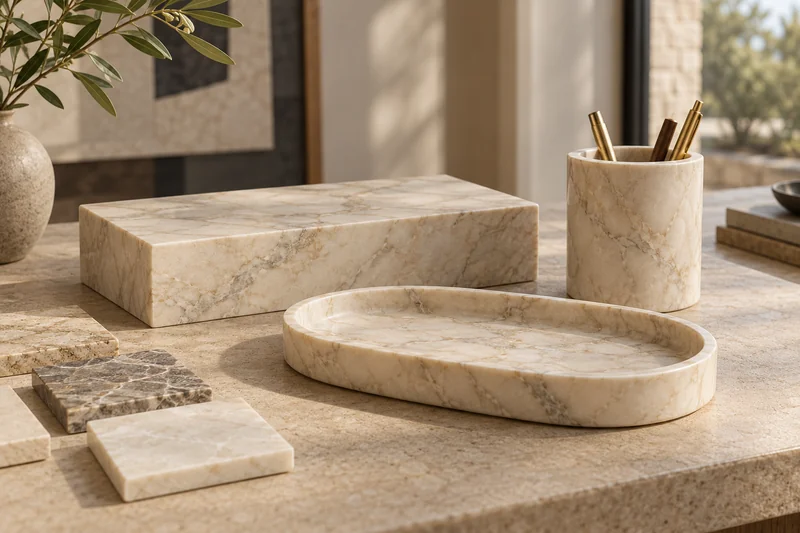
Home accessories can describe everything from a small dish to a large furniture piece. An OEM inquiry becomes more useful when it identifies the specific objects required. A tray, a low display base and a pen holder form a different development task from a table, a lighting fixture or a complete bathroom installation.
State the commercial role of the range. Is it a coordinated retail collection, a brand gifting program or a group of objects for a hospitality project? That determines whether presentation, repeat ordering, packaging consistency or use by staff needs particular attention.
Keep the first range focused. Each extra shape, size or material adds decisions about drawings, samples and packing. A smaller coherent collection can make approval more manageable, but the right number of items depends on the project. There is no universal assortment size that guarantees a successful launch.
Agree on the meaning of OEM and private label
Those terms are used differently by suppliers. Confirm whether the project involves producing your drawing, adapting a proposed shape or developing a new concept together. Identify who supplies artwork, who approves revisions and which deliverables are included in the agreed scope.
A branded item is not automatically an exclusive design. If exclusivity or ownership of project files matters, address it in the commercial agreement. Do not infer these rights from a custom logo or the fact that you paid for a sample.
Also clarify what is outside the proposal. A natural stone manufacturing project does not automatically include sourcing unrelated hardware, operating a retail store or managing every destination-market requirement. A written scope helps both teams avoid different assumptions about what full service means.
Build a material language across the range
Choose background tone, finish and level of movement as shared references. The goal may be coordination rather than identical veins. A larger tray can show a feature that would dominate a small display block, so evaluate material at the scale of each object.
Ask how future batches will be compared with the retained references. Natural material availability can change, and a repeat order deserves a material review rather than an automatic promise of exact appearance. If a specific color range is critical, explain which deviations are unacceptable.
Include any surface filling or treatment in the discussion where relevant. The sample should communicate the finished surface, not just a stone name. Technical suitability depends on the selected material and use; a coherent visual collection still needs each object to function appropriately.
Use one specification record per item
A range-level mood board is helpful, but every object needs its own dimensions and details. Record the external size, clear space where relevant, edges, recesses or openings, finish, underside and any branding. Identify the important visible faces.
For a holder, provide the intended contents and required opening. For a tray, explain the arrangement it should accommodate. For a display base, identify what sits on top and how it will be handled. These details turn a visual concept into an assessable product.
Give the records version numbers. If the factory proposes a revision, update the affected item and check how the change fits the rest of the collection. Otherwise, a photograph, a drawing and a price quotation can unintentionally refer to different versions of the same product.
Compare collection decisions
| Decision | Logo-first approach | Product-development approach |
|---|---|---|
| Range | Several attractive images | Defined objects and shared purpose |
| Material | One color name | Appearance range and finish references |
| Branding | Position decided at the end | Artwork and application assessed with the design |
| Sample | Approved for appearance alone | Fit, finish, handling and base also reviewed |
| Packaging | Generic box | Unit protection and brand requirements specified |
| Repeat order | Assumed identical | Retained specifications and material review |
The second approach creates a better basis for planning, not a guarantee against every variation or delay. The value is that unresolved questions become visible while changes are still easier to discuss.
Review branding and packaging together
Provide the actual logo artwork and intended placement. A mark on a narrow edge presents a different task from one on a broad underside. Ask to see the proposed application on a relevant sample before assuming that a digital overlay will reproduce cleanly in stone.
Private-label requirements may also include labels, insert cards, unit cartons and outer carton identification. Specify which are required and who supplies the content or files. These are items to confirm, not services automatically included with every stone order.
Packaging should suit both presentation and distribution. If a retailer will reship individual units, explain the second delivery route. Confirm the packing configuration used for costing and any evaluation required. A coordinated box design cannot replace protection appropriate to the object inside.
Plan sampling and order quantities by design
Ask for a sample plan that identifies what each sample will establish. Several objects made in one stone can share an appearance direction, but their machining and handling still need separate review. A new shape cannot be approved only because another product's finish looked good.
List quantities by design, size and material rather than giving only a collection total. Material sourcing and production setup can depend on that breakdown. If you want staged quantities or replenishment, describe the requirement so the proposal can address it realistically.
Build the launch schedule around approved decisions. Request timing after the scope, materials and sample revisions are understood. Photography, packaging artwork and final review also require time. Avoid announcing a delivery date based solely on an unapproved design illustration.
Start a DeHong Stone OEM discussion
Share a short range brief at www.dehongstone.com: proposed objects, references or drawings, quantities, intended market, use, preferred natural stone and branding or packaging requirements. Separate essential requirements from preferences so alternatives can be evaluated without losing the core idea.
Around 50 pieces can be an initial discussion quantity for a suitable small-batch item, subject to review by design and material. Request quantity comparisons where useful; mixed designs do not automatically share the same minimum or unit price. Sample costs and any development work should be confirmed separately.
The standard discussion basis is FCA: samples with full prepayment, and small production orders with a 30% deposit and balance before dispatch. The quotation must confirm the named place, schedule and agreed scope. No image in this guide reserves material, establishes stock or substitutes for a sample approval.
FAQ
FAQ 1: Can I start from a reference rather than a finished drawing?
Answer: Yes, a reference can begin the discussion. Its geometry, dimensions, ownership permissions and material suitability still need review before a production specification can be agreed.
FAQ 2: Does private label mean the design is exclusive?
Answer: Not automatically. Confirm exclusivity, artwork rights and project ownership separately in the agreement when they matter to the range.
FAQ 3: Can every item use exactly the same stone pattern?
Answer: Natural patterns do not repeat like printed graphics. Define an appearance range and discuss selection requirements for the important visible areas.
FAQ 4: Are retail boxes and barcode labels included?
Answer: Only if agreed. Provide the requirements and artwork responsibilities so packing and labeling can be included in the proposal accurately.
FAQ 5: What should be approved before a production deposit?
Answer: Confirm the drawing versions, material range, finish, quantities, sample status, packing, price basis and commercial terms relevant to the order. Open issues should be recorded rather than assumed resolved.
Apply the guidance to your project
For a project-specific review, send your intended use, drawing or reference, dimensions, material preference, estimated quantity and delivery destination to DeHong Stone. The team can review which details need sample confirmation before quotation.
Website: www.dehongstone.com
Email: hefeng@dehongstone.com
WhatsApp: +86 139 8660 4493
General purchasing guidance is not a project quotation or a material test result. Confirm specifications, verification and terms for the selected sample.
Bring your drawing and project requirements.
Include your intended use, reference, dimensions, material preference and quantity. Agree the feasibility review and sample requirements in writing.