Choosing Marble for Desktop Objects: Porosity, Hardness and Surface Finishes
Choose marble for a desktop object by matching its verified material characteristics, finish, geometry, and maintenance needs to the intended use. Review representative samples, distinguish water absorption from stain resistance, and assess edge and assembly details separately from mineral hardness. A paperweight, pen holder, and cosmetics tray need different evaluations. Approve the actual material-and-finish combination rather than relying on a trade name or photograph.
Published
Updated
Define the object before selecting the stone
Start with what the object must do. A paperweight needs an appropriate mass and a stable underside. A pen holder needs usable openings and edges that tolerate ordinary handling. A presentation tray needs a defined load and a practical way to lift it. A decorative base may have mounting holes and a metal component that changes its balance.
Write a short use statement: where the object sits, what touches it, whether liquids are expected, how often it moves, and how it will be cleaned. Include the surface beneath it, such as a lacquered desk or glass shelf. Then identify whether the buyer expects a changing natural patina or a closely maintained appearance. This is a design preference that should be settled before sample approval.
A trade photograph cannot answer these questions. Use photographs to establish a visual direction, then use representative physical samples and an agreed prototype to evaluate the proposed object.
Understand what the material name establishes
Ask for the commercial name and available geological description of the proposed stone. Record the particular supply selection being reviewed, rather than assuming every piece sold under a familiar name is interchangeable. If composition is important to the application, request supporting identification instead of inferring it from color or veining.
For example, calcite is a carbonate mineral with a Mohs hardness of 3. That number describes the mineral; it is not a guaranteed hardness certificate for every object described commercially as marble. Minerals Education Coalition calcite reference
Request disclosure of visible filling, resin treatment, repaired areas, and backing relevant to the finished object. Ask which faces will be exposed after machining. A face approved on a slab photograph may not represent the appearance of a newly cut edge, deep pocket, or drilled opening. If a dramatic vein is essential to the design, mark its desired relationship to the object on the approval drawing.
Compare appearance across small stone forms
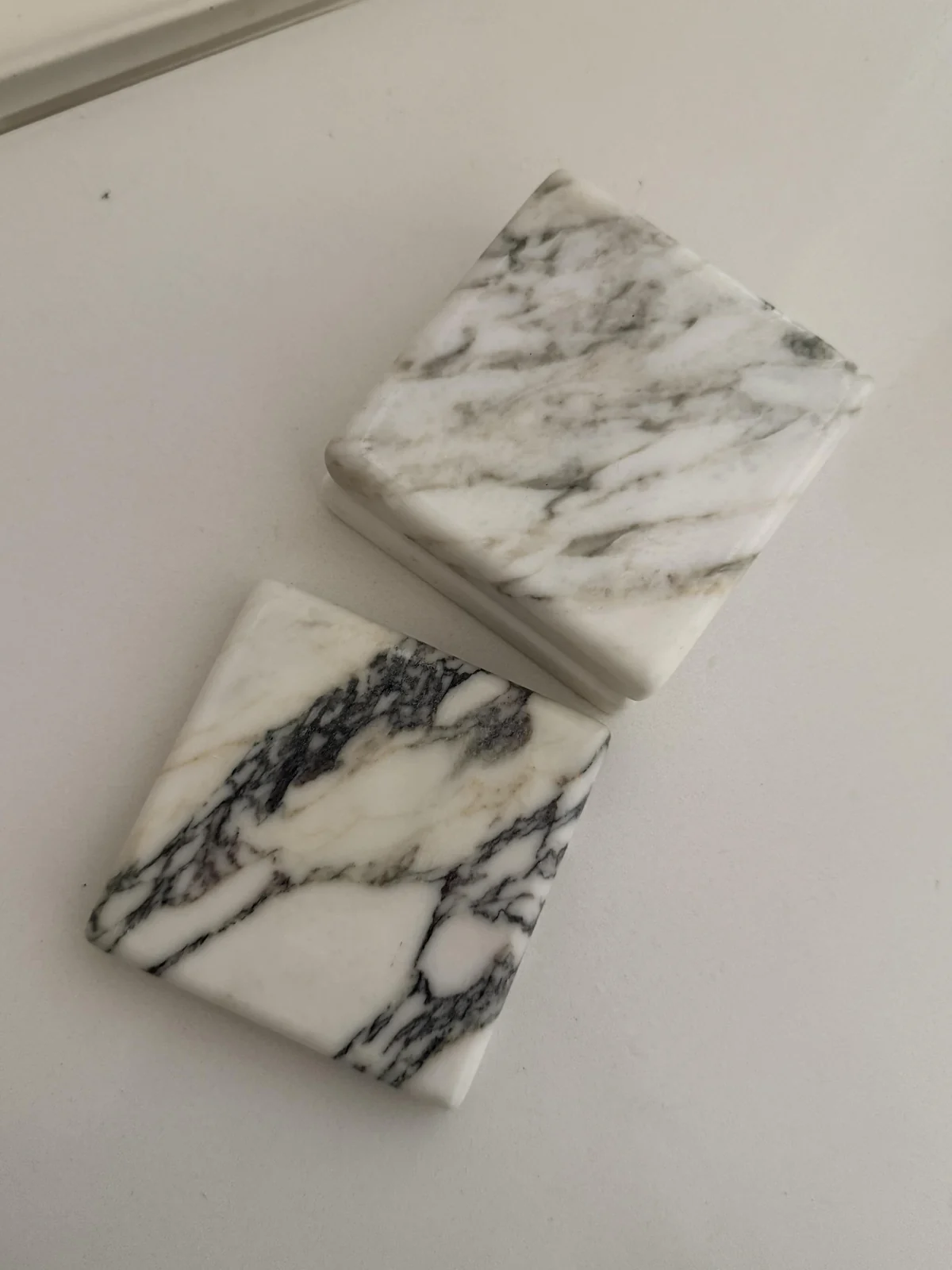
Supplied product photographs for discussing form, arrangement and visible appearance. Confirm stone identity, dimensions and suitability for your project through sample review; these references are not a stock catalogue or a customer delivery case.
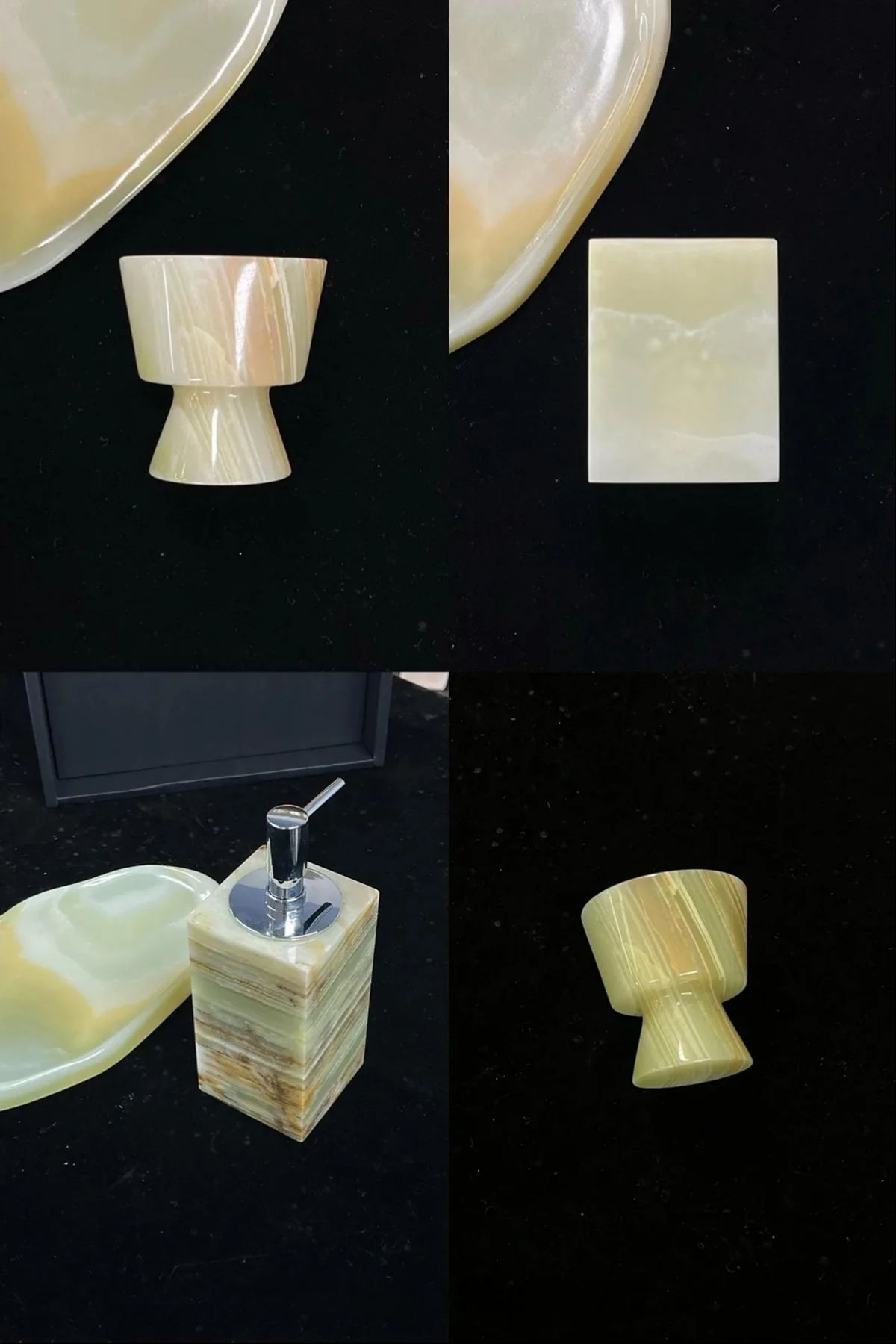
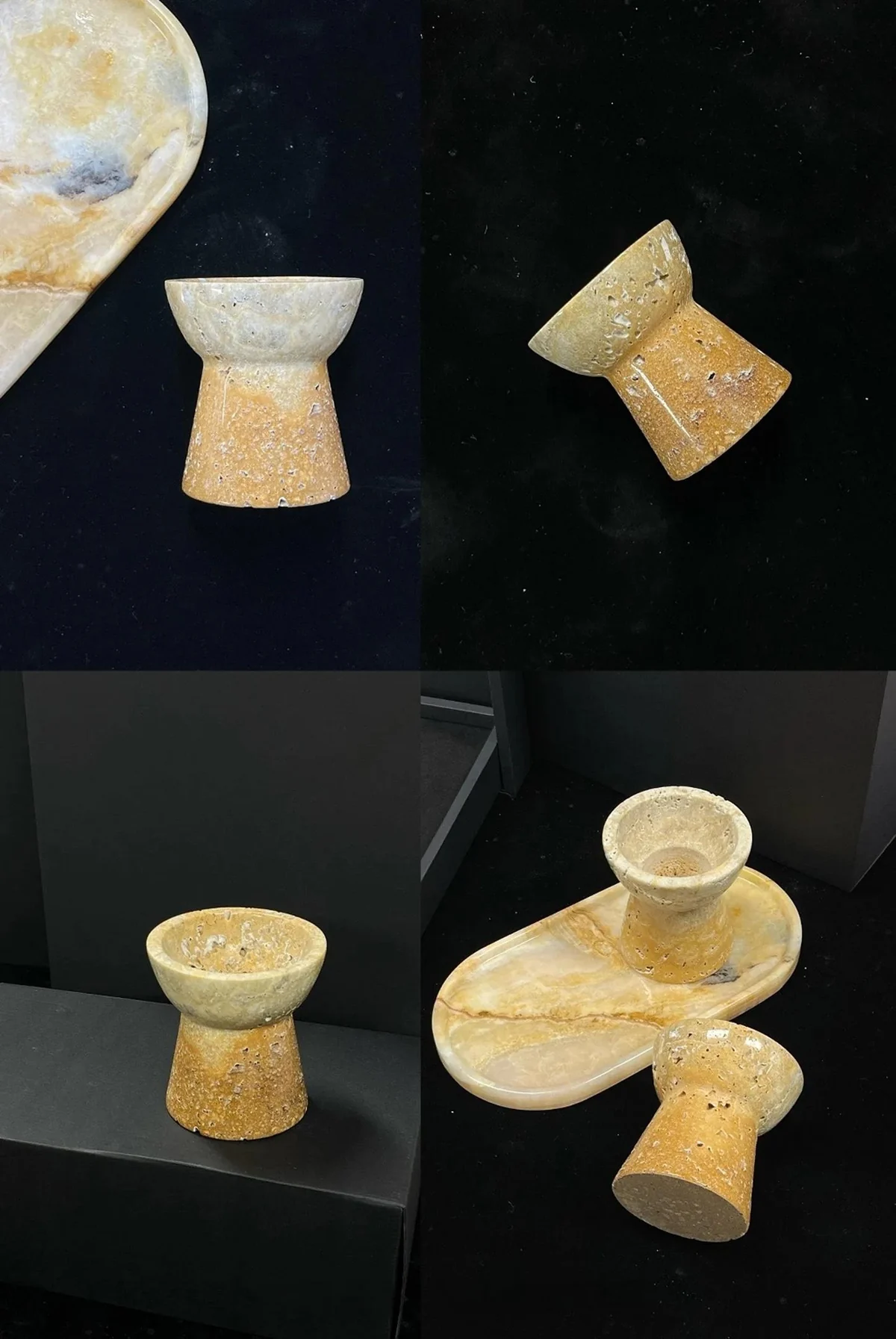
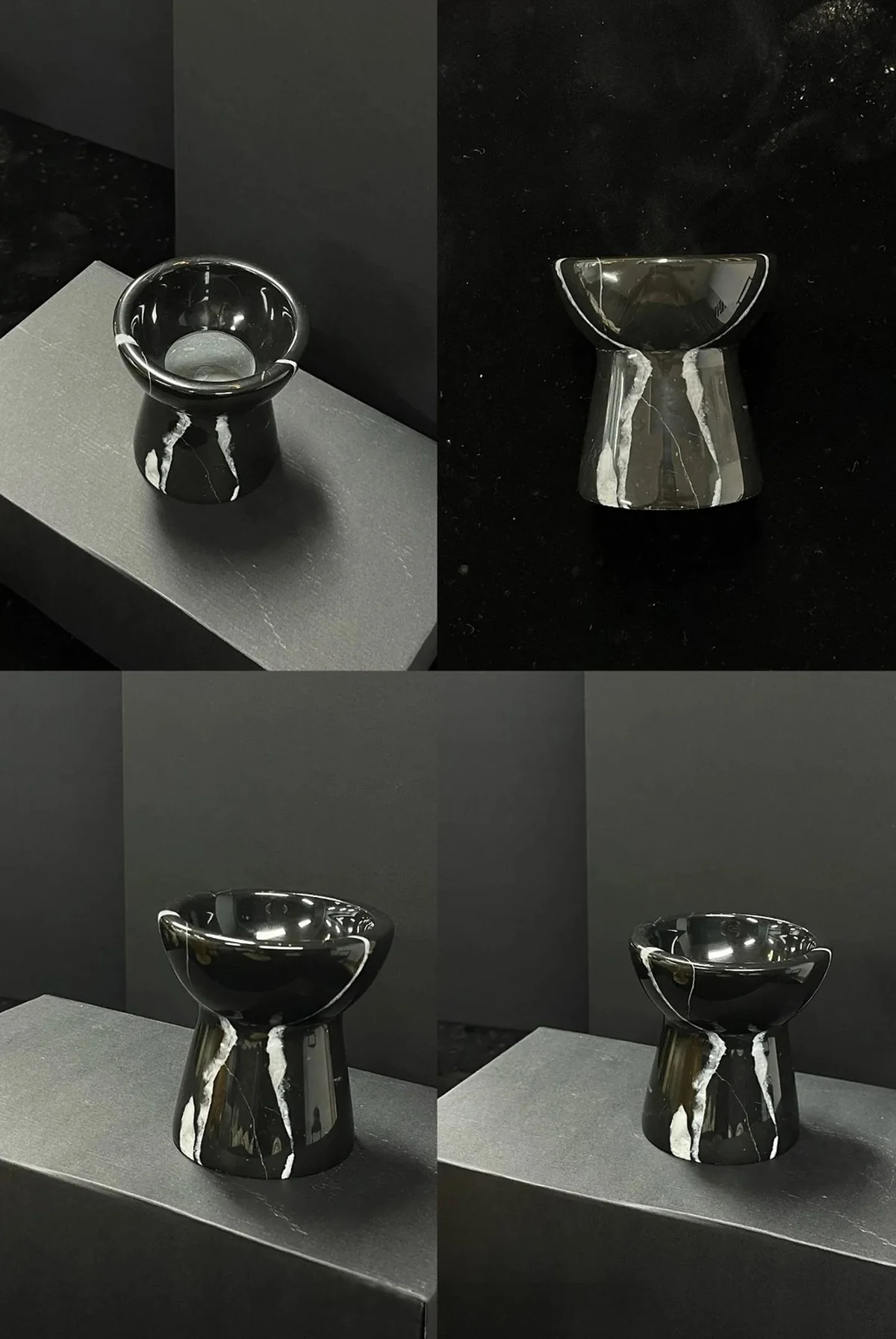
Porosity and absorption answer different questions
Porosity concerns the proportion of void space in a material; water absorption concerns water taken up under a defined procedure. USGS porosity definition Neither should be represented by an unexplained percentage in a quotation. Ask what was measured, which method was used, how the sample was prepared, and whether the report relates to the proposed material.
ASTM C97/C97M covers absorption and bulk specific gravity of dimension stone. Its title and scope make it a useful reference when requesting comparable material data. A report using that method does not automatically establish resistance to a particular cosmetic oil, coffee spill, or cleaner on a finished desktop accessory. ASTM C97/C97M
How to use an absorption report
Read the sample identification and test date before comparing the headline values. Confirm whether the specimens were treated and whether the report provides the conditions needed to interpret its findings. If two documents describe different stone selections or use different methods, label the comparison as incomplete rather than ranking them as if they were directly equivalent.
For a small decorative object, an elaborate laboratory programme may be unnecessary. A practical decision can combine available material documentation with representative sample screening. Where a buyer sets a numerical requirement, however, specify the test method, sample basis, and required evidence in writing. Do not turn an informal water-drop observation into a certified absorption value.
Hardness is useful but does not describe every failure
Mineral hardness describes relative resistance to scratching. National Park Service hardness reference Hardness, bending strength, impact resistance, and the strength of an assembled product are different considerations. A harder mineral reference does not establish that a slender tray rim will survive a drop or that a drilled base will support an attached object. The geometry, material condition, support, and load must also be reviewed.
ASTM C880/C880M addresses flexural strength using a defined beam-loading method. Its scope accounts for relevant loading orientations and, when required, wet conditions. Such data can contribute to a material comparison, but a standard specimen is not the same as a finished pen holder with cavities or a base with a metal fixing. ASTM C880/C880M
Examine the details most likely to control the design
On the drawing, identify narrow sections around holes, deep recesses, unsupported projections, and transitions between thick and thin areas. Ask the fabricator to review these details with the selected stone before finalizing dimensions. Avoid publishing a universal minimum wall thickness or edge radius without evidence for the particular design.
For a tray, define where the user should lift it and whether it may be lifted while loaded. For a bookend, establish the supported item and expected handling. For a display base, specify the weight and centre of gravity of the attached component. Treat any proposed load or handling trial as a project-specific assessment, not proof of every possible impact condition.
Choose the finish by viewing and handling samples
Honed stone has a smooth, low-gloss appearance; polished stone has a reflective finish. These are finish descriptions, not complete performance grades. The Natural Stone Institute glossary provides terminology that can help keep the specification consistent. Industry finish terminology
A buyer should compare the same candidate stone in the finishes under consideration, under the lighting expected on the desk or in the retail display. View the face, edge, recess, and transition between them. Assess how the finish represents the intended color and vein pattern and whether the approved level of reflection is consistent across visible surfaces.
Honed finish
A honed sample is useful when the design calls for a quieter reflection. Do not equate a matte appearance with a rough surface, or assume that all honed finishes are visually identical. Ask for an agreed physical reference. If a production process is described by abrasive grit, retain the sample too; the process description alone does not replace visual approval.
Polished finish
A polished sample is appropriate when the design calls for a reflective surface. Review it under directional light as well as diffuse light, and inspect curved or narrow areas that may be finished differently from the broad face. Do not describe polishing as a waterproofing treatment or a guarantee against scratches.
Textured or mixed finishes
For a brushed, textured, or mixed-finish object, ask for a sample of the exact texture and transition. Consider whether the user can remove dust or product residue from the proposed surface. Confirm which areas contact hands, the desk, or displayed items. These are practical review questions; suitability depends on the particular object and cleaning routine.
Evaluate liquids and surface protection separately
Calcareous stone is sensitive to acidic cleaning products and liquids. The Natural Stone Institute recommends appropriate non-acidic cleaning and explains that sealing improves stain resistance rather than making stone stain-proof. Material selection should therefore include the likely exposure and maintenance plan. Stone care and sealing guidance
For a cosmetics tray, compare actual products on representative samples. For a pen cup, consider ink transfer and the cleaning method. For a dry decorative object, prioritize handling, appearance, and the underside interface. These are proposed screening priorities, not claims that a named stone has passed those tests.
If a treatment is proposed, approve the finished appearance and obtain application and maintenance instructions. Confirm whether visible edges and recesses are included. Keep treatment requirements separate from the finish name so that a substitution cannot silently change the approved combination.
Build a small but useful approval package
The following is a proposed purchasing workflow, not a description of tests already completed by DeHong Stone.
1. Identify the candidate stone and finish with representative samples showing the agreed range of color and veining. 2. Review a drawing with dimensions, cavities, edge details, contact surfaces, and any metal or adhesive interfaces. 3. Approve a prototype where geometry, fit, stability, or handling cannot be judged from a flat sample. 4. Agree on relevant exposure and cleaning checks, with methods and acceptance conditions recorded before testing. 5. Retain the approved reference, photographs, and written exceptions, including how substitutions will be reviewed.
For repeat orders, use the retained reference to discuss acceptable variation rather than expecting natural stone to reproduce a digital photograph exactly. Distinguish a cosmetic variation from a functional concern. A changed vein position may be acceptable; an altered fixing position may prevent assembly. The specification should make that distinction clear.
Request a written material review
DeHong Stone is a custom small stone products factory. Send your CAD files or reference images, dimensions, preferred material, quantity, and use requirements through www.dehongstone.com, hefeng@dehongstone.com, or WhatsApp. Request a written review of the material, finish, geometry, and sample approval scope before production.
If travertine is an alternative for a small tray, decide pore filling separately from the finish. The travertine tray sample checklist sets out the face-by-face and care questions to resolve before ordering.
Frequently asked questions
Is lower water absorption always the best choice?
No. It may be relevant to the intended use, but it does not settle appearance, acid sensitivity, geometry, or resistance to a particular staining agent. Compare valid data alongside representative finished samples and project requirements.
Does polished marble resist every stain better than honed marble?
No universal ranking should be assumed across different stones and treatments. Compare the actual candidate material in each proposed finish under the same exposure and cleaning conditions. Appearance and treatment history must also be documented.
Can Mohs hardness determine a safe wall thickness?
No. Mohs hardness concerns scratch resistance of minerals. Wall thickness also depends on geometry, stone condition, fabrication, support, and intended loads. Request a design review and, where appropriate, prototype assessment rather than deriving thickness from one hardness number.
What information makes a custom enquiry useful?
Provide CAD files or reference images, dimensions, material and finish preferences, quantity, and intended use. Add the expected liquids, attached components, handling, and appearance criteria. Identify any mandatory test evidence so the review can address it explicitly.
Comparing a porous alternative? The travertine material guide explains colour families, cut direction and surface decisions before you specify a small object.
Compare the intended contact areas in the Duo Valet tray reference when discussing stone, finish and protection for small everyday objects.
Buyer questions for this project
Start with the short answer, then expand the project considerations before preparing your brief.
Q: What information is needed to quote custom natural stone accessories?
Short answer: Share the intended use, reference images or drawings, dimensions, preferred stone and finish, estimated quantity, packaging requirements and destination.
Project considerations
Identify the dimensions that affect fit, the objects the accessory will hold and any logo, lining or separate components. If the material or quantity is undecided, explain your priorities so that options can be evaluated. DeHong Stone reviews the brief before confirming feasibility, sample requirements and a project-specific quotation. Website references are starting points for custom development, not a ready-stock catalogue.
Apply the guidance to your project
For a project-specific review, send your intended use, drawing or reference, dimensions, material preference, estimated quantity and delivery destination to DeHong Stone. The team can review which details need sample confirmation before quotation.
Website: www.dehongstone.com
Email: hefeng@dehongstone.com
WhatsApp: +86 139 8660 4493
General purchasing guidance is not a project quotation or a material test result. Confirm specifications, verification and terms for the selected sample.
Bring your drawing and project requirements.
Include your intended use, reference, dimensions, material preference and quantity. Agree the feasibility review and sample requirements in writing.