Custom Marble Display Bases: A Procurement Guide for Fragrance and Jewelry Brands
TL;DR: A marble display base inquiry should state what the base is made from, what it supports and where it will be used. For compact fragrance and jewelry displays, confirm the footprint, height, top surface, edge profile, underside and material appearance before comparing quotations. DeHong Stone focuses on small natural stone objects and custom projects; this guide concerns tabletop bases, not slab-storage racks, complete showcases or store furniture systems.
Published
Updated
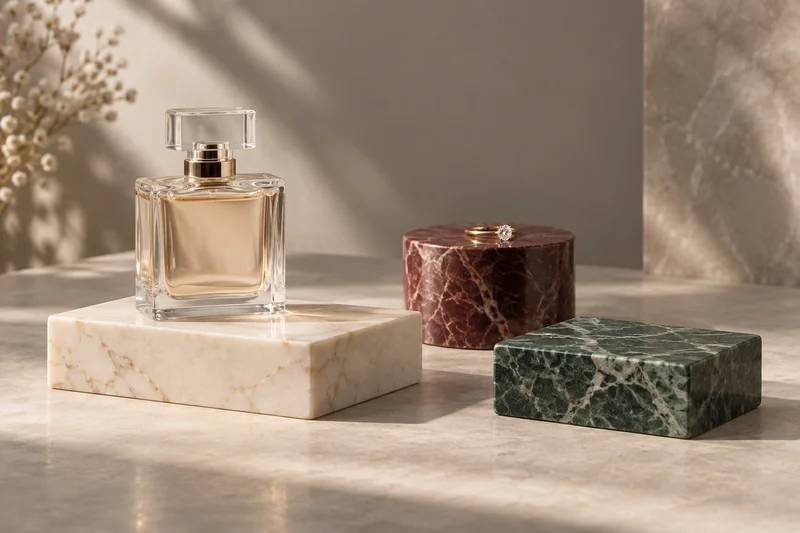
Make the product category unambiguous
The phrase stone display stand can mean a stand made from stone or a rack that displays stone slabs. Likewise, a marble perfume display may describe a compact block, a large counter or furniture with a stone-looking finish. Attach a reference and name the actual object.
For example, describe a low solid natural marble tabletop base supporting one fragrance bottle. That establishes material, scale and use more effectively than a broad request for a luxury display. If you need a recessed top or another detail, show it rather than assuming it is part of the word base.
Separate the stone component from other requirements. Lighting, metalwork, acrylic fittings and full store installation are different tasks and should not be inferred from a photograph of a styled display. A focused scope makes a manufacturer's response easier to assess and compare.
Start with the item placed on top
Provide the bottle, jewelry box or object dimensions and approximate weight. Explain whether the item stands alone, moves during demonstrations or is used with other pieces. For a group display, show the intended arrangement rather than sending only the dimensions of the largest product.
A raised base changes both visibility and handling. The desired height should suit the counter and viewing position without creating an awkward presentation. Do not assume that a small object is stable merely because the stone below it is heavy. Evaluate the combination in the intended arrangement.
If customers will handle the products, describe how staff reset the display and clean it. A base used behind glass has different exposure from one on an open fragrance counter. The design brief should reflect the real activity around the object rather than only the staged photograph.
For perfume, identify whether the bottle is a sealed presentation item, an actively used tester or part of a discovery set. Include the cap and pump in the handling description. For jewellery, identify whether the item rests directly on the stone or on a separate holder. A small ring, a watch with a clasp and a necklace on a bust create different contact and access conditions.
Provide the actual contact footprint, maximum overall width, height and filled weight of each item. A bottle may be wider at its shoulders than at its base. A watch clasp may extend beyond the apparent display area. The largest outline therefore matters even when a recessed seat touches only a smaller part.
Separate three dimensions in the drawing: the overall base, its usable top surface and the space needed to pick up the displayed item. A chamfer or rounded perimeter can reduce the flat area. A raised border changes access from the side. A drawing that specifies only the outside dimensions leaves these relationships unresolved.
If the items are not available yet, mark measurements as design targets and identify who will supply final components. Do not approve recesses around a temporary substitute without documenting the difference. The final bottle or holder may require a revised sample.
Outline the display on the actual countertop, or use a full-size paper layout. Include neighbouring products, labels, price cards and the area a staff member needs to reset the display. This inexpensive layout review can reveal an awkward arrangement before stone is selected.
Specify the top, sides and underside
Record overall dimensions, height and important edge details. If there is a recess, add its usable dimensions and depth. Identify whether the main surface is flat or intentionally shaped. A top-view image alone cannot define these details reliably.
The side profile affects how substantial the base appears. A chamfer or eased edge can change the visual character, but should be assessed with the selected stone and the overall geometry. There is no universal edge section suitable for every material and size.
The underside determines the contact arrangement with the counter. Confirm its finish and any proposed protection. If pads or backing are used, assess their position and suitability for the supporting surface. They do not justify sliding a heavy object over valuable furniture or leaving grit beneath it.
A compact stone object can still be heavy for its size. Record measured prototype weight and ask staff to assess lifting and resetting with the intended contents removed or in place, as appropriate. Do not infer comfortable handling from an image or a nominal external dimension.
Review the underside on the actual counter finish. If feet are proposed, consider their position, contact area, thickness and attachment method. Confirm whether the base rocks, slides or marks the surface under the agreed handling scenario. These observations guide changes; they do not justify an untested anti-slip or load-bearing claim.
Draw the required edge profile and identify where fingers approach it. A softened edge, chamfer and radius are different geometric requests. Discuss the achievable result for the selected material, especially near recesses or thin sections. Use the CAD-to-prototype tolerance guide to agree which dimensions are functional and how to inspect them.
Choose stone that supports the brand presentation
A quiet ivory base can recede behind packaging; a strongly veined burgundy base can become a visual feature. Neither is automatically better. Evaluate the bottle label, jewelry or packaging against the actual proposed stone under relevant lighting.
For a coordinated set, establish shared background tones, finishes and visual movement. Different heights may look related without identical veins. If the important display face needs a restrained area, explain that priority and discuss material selection before assuming it can be guaranteed.
Retain real material references for repeat orders. An approved photograph establishes a direction but does not reserve future natural patterns. A replacement batch should be reviewed against the agreed appearance criteria, with any new material decisions documented before production.
A custom marble display base begins with confirmation of the actual marble. A commercial colour name, a rendered image or a photograph of a large slab does not establish the identity and properties of the proposed material. Request a representative material view and review the intended cutting area at the scale of the object.
When specifying a honed marble display base for perfume, compare its surface with a polished sample if reflections affect label legibility. Describe the preferred appearance rather than assuming a finish determines stain resistance. The marble selection guide explains why material properties and finishing need separate review. The material library provides directions to discuss, with availability confirmed for the project.
Compare typical display roles
| Role | Main information required | Sample review focus |
|---|---|---|
| Single fragrance bottle | Bottle footprint, weight and handling | Fit, appearance and counter use |
| Jewelry or packaging | Contact surface and display arrangement | Contrast, access and finish |
| Coordinated riser set | Each size, height and layout | Group proportions and stability |
| Retail brand program | Quantity by location and replenishment needs | Consistency criteria and packing |
| One-site project | Available space and delivery access | Placement and handling |
These categories guide the conversation; they are not standardized product ratings. A useful proposal still needs the actual design, stone and use conditions to be reviewed.
Evaluate exposure rather than assuming resistance
Fragrance displays may encounter incidental product contact, while jewelry arrangements can be near cosmetics or cleaning products. State the actual substances and routine. A natural marble name or a polished finish does not establish chemical compatibility.
If a particular resistance requirement matters, define a sample assessment with the appropriate specialist or supplier. Specify the finished material, exposure and cleaning method, and agree what constitutes an acceptable outcome. Do not present a casual observation as certification or use generated imagery as test evidence.
Material-care instructions should remain available to the operating team. Conventional impregnation can improve stain resistance in appropriate cases but does not make acid-sensitive stone immune to etching. Detailed care should follow the actual material and surface treatment, supported by relevant industry guidance. [1]
Decide whether the item rests on bare stone, a removable pad or a separate insert. Consider how spilled product will be noticed and removed, including beneath the bottle. An attractive recess can conceal liquid and make cleaning less convenient if the clearance is too tight.
Where jewellery touches the base, review possible rubbing, trapping and snagging points. If a soft insert is proposed, specify its coverage, thickness, appearance and removal method. The stone, lining and adhesive must be evaluated together; naming a soft material does not establish compatibility with every finish or piece of jewellery.
A removable holder may let a brand update its presentation while keeping the stone base. This is a development option, not an established DeHong Stone accessory system. Confirm the separate component supplier, connection, fit and replacement arrangements before treating it as part of the quotation.
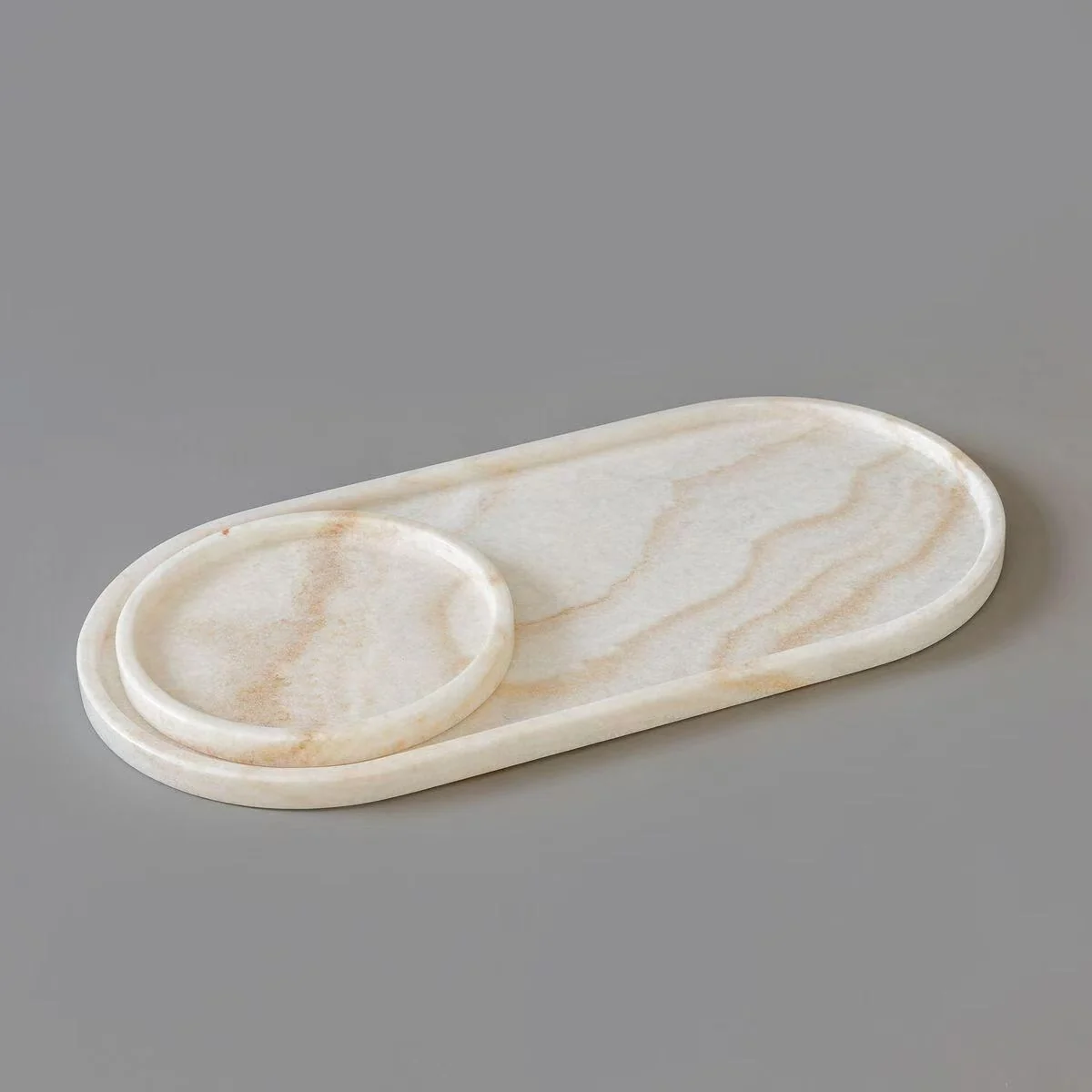
Small display arrangements to discuss
Supplied product photographs for discussing form, arrangement and visible appearance. Confirm stone identity, dimensions and suitability for your project through sample review; these references are not a stock catalogue or a customer delivery case.
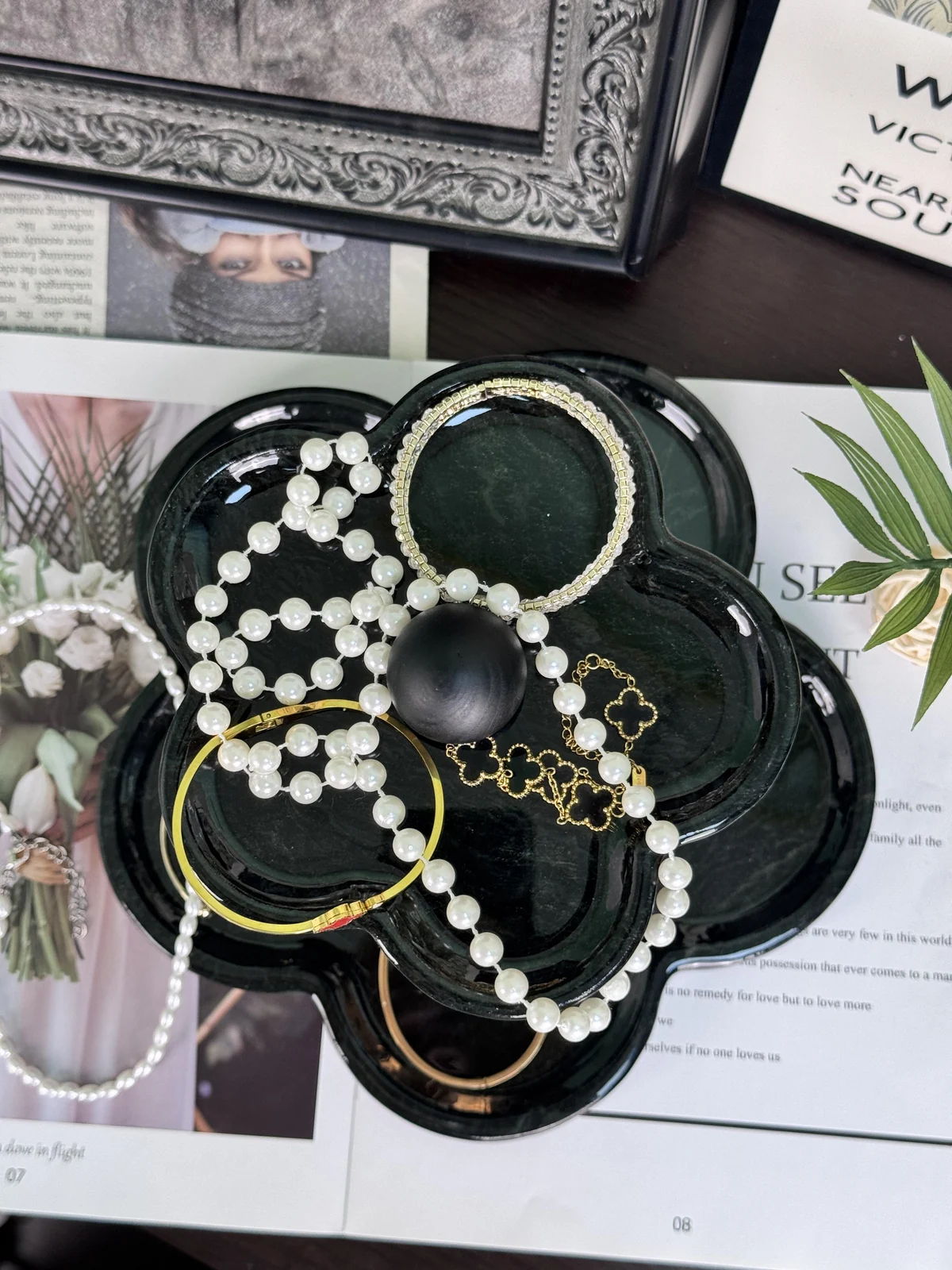
Use a finished sample to resolve practical details
Place the intended merchandise on the sample and view it from normal positions. Check the visual balance, clear space and the ease of lifting the displayed item. If several heights form a set, assess the arrangement together rather than approving each piece in isolation.
Check the finished edges, top and base, and record the drawing version. A design revision after sampling may require another review. The sample record should explain what has been accepted and which questions remain open, not simply state approved without context.
For commercial quantities, agree how geometry, finish and natural appearance will be reviewed. A working acceptance record is more useful than expecting every unit to duplicate the hero image. Packaging and delivery arrangements should reference the approved design rather than an earlier concept.
Use a written review sheet with separate decisions for layout, appearance, contact, handling and packing. For each item, record the observation, whether it is accepted, any requested change and the person responsible for the next check. Photographs are useful when paired with dimensions and a clear description; photographs alone cannot establish fit or resistance to spills.
Request an order-specific proposal
Send quantity by size and material, destination, branding needs and whether the bases will be reshipped individually. Ask which parts of the proposal concern the stone, the sample, packing and transport. A comparable quotation describes its scope as well as its price.
For a DeHong Stone inquiry, use www.dehongstone.com and include a drawing or reference, the supported item's dimensions and weight, intended setting and preferred stone. Explain which requirements are essential and where you welcome alternatives. The initial review can then focus on the actual manufacturing task.
Around 50 pieces can be a discussion starting point for a suitable small-batch design, with the order assessed individually. Samples are discussed on FCA terms with full prepayment. Small production orders are discussed on FCA terms with a 30% deposit and balance before dispatch. The named FCA place, timing, sample scope and final commercial terms belong in the quotation.
FAQ
FAQ 1: Does this include full perfume counters or jewelry cabinets?
Answer: This guide concerns compact tabletop natural stone bases. A complete cabinet or mixed-material retail system is a different scope and should not be assumed to be included.
FAQ 2: Can a base support any bottle because it is heavy?
Answer: No. The bottle, base geometry, contact surfaces and use all matter. Evaluate the actual combination rather than relying on the stone's weight alone.
FAQ 3: Can several base heights be ordered as a set?
Answer: Provide the dimensions, quantity and intended arrangement for every piece. Each design and the overall composition need review before pricing and sampling are finalized.
FAQ 4: Is a recessed top required?
Answer: Not always. The appropriate surface depends on the displayed object and handling. If a recess is wanted, specify its dimensions and depth rather than inferring them from a styling image.
FAQ 5: What helps avoid an irrelevant quotation?
Answer: State solid natural marble, compact tabletop scale and the intended fragrance or jewelry use. Attach a reference and provide the supported item's dimensions so the supplier does not interpret the request as a slab rack or complete store fixture.
[1] Natural Stone Institute — Care & Cleaning of Natural Stone
Sources and further reading
- TJDC jewellery display categories: commercial display terminology and product-category examples, not evidence of DeHong Stone capabilities or customer purchasing intent.
- Natural Stone Institute care guidance: general care and protective-treatment principles.
- Natural Stone Institute stain guidance: oil-based stain categories, including cosmetics.
Further specification questions
Can one stone base serve both perfume and jewellery displays?
Possibly, but review each use separately. Bottle handling and potential spills differ from jewellery contact and holder requirements. A shared outline does not establish that the same finish, recess or insert is suitable for both applications.
What measurements should I send for a perfume display base?
Send the bottle’s contact footprint, maximum width, height and filled weight, plus the available counter space. Include the cap or pump, label position and how the bottle will be lifted. Mark provisional dimensions clearly if the final bottle is unavailable.
Does a honed finish make marble resistant to perfume spills?
No. A honed appearance does not establish spill resistance. Evaluate the selected marble, any treatment and the actual fragrance or cosmetic products on a representative sample, and agree appropriate cleaning instructions.
Can I request a small batch with several stone colours?
Yes, you can submit that brief for review. Provide quantities for each design, stone and finish. Material availability, setup, sample requirements and packaging determine the proposed production plan and project-specific minimum quantities.
Compare the footprint and display arrangement of the Twin Base reference with the actual items to be displayed before agreeing dimensions and contact protection.
Apply the guidance to your project
For a project-specific review, send your intended use, drawing or reference, dimensions, material preference, estimated quantity and delivery destination to DeHong Stone. The team can review which details need sample confirmation before quotation.
Website: www.dehongstone.com
Email: hefeng@dehongstone.com
WhatsApp: +86 139 8660 4493
General purchasing guidance is not a project quotation or a material test result. Confirm specifications, verification and terms for the selected sample.
Bring your drawing and project requirements.
Include your intended use, reference, dimensions, material preference and quantity. Agree the feasibility review and sample requirements in writing.