Custom Stone Plaques: What to Specify Before Approving Size, Edges and Artwork
Before approving a custom stone plaque, confirm six things: its intended use, finished dimensions, usable artwork area, edge treatment, selected stone and finish, and the physical evidence needed to approve any marking. Keep the drawing and artwork revisions together. A digital proof can establish layout; it cannot establish the finished result on natural stone. DeHong Stone uses a project brief to identify the details that still need feasibility and sample review.
Published
Updated
1. Start with where the plaque will be used
A compact stone plaque for a retail counter, gift presentation or brand display needs a different brief from an outdoor sign or a wall panel. State whether it will lie flat, sit in a separate holder or form part of another object. Include the available space, viewing direction and whether staff or customers will handle it.
This guide covers small custom stone objects. It does not specify structural mounting, exterior signage or building work. If a holder or fixing is required, treat it as a separate design item that needs a fit and stability review. A flat illustration does not establish safe support.
Use the bespoke stone plaque collection to explain the intended outline. The Signature Plaque design reference can help start that discussion; its visual is a concept, not proof of a finished, engraved sample.
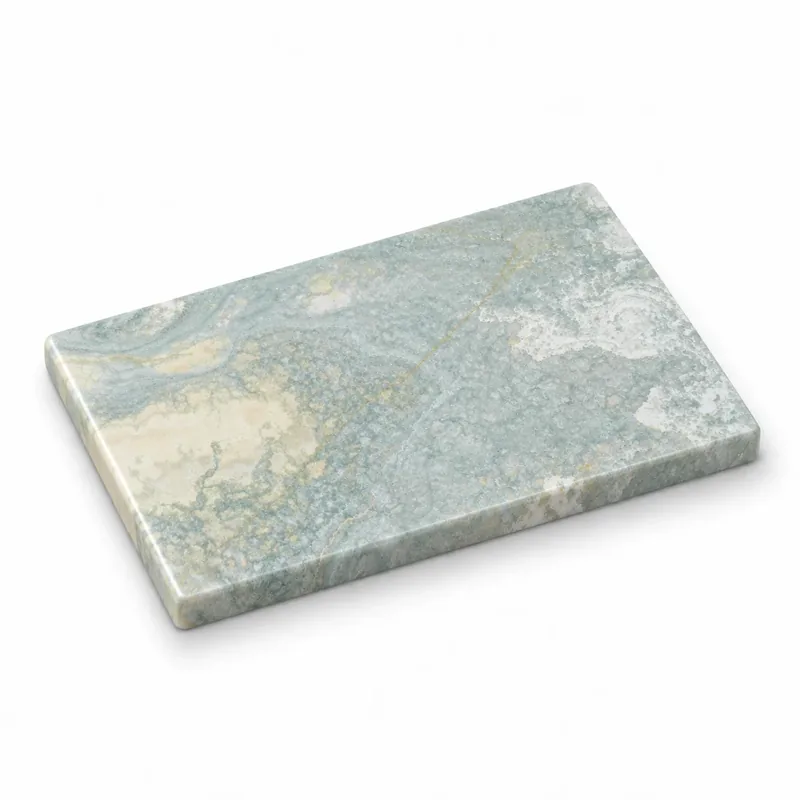
2. Separate the outside size from the usable artwork area
Send a dimensioned drawing with a revision number, date and units. Mark length, width and thickness separately, then identify the front face, top direction and any features that must align with a holder. Do not rely on a perspective image for measurement.
- Outside dimensions: the finished outline, including corner radii or other shaped edges.
- Artwork area: the boundary within which the logo or text must fit, measured from named edges.
- Visible edges and back: which surfaces will be seen or touched, and what finish is requested.
- Functional dimensions: any dimension affecting fit, placement or stability. Agree the measurement method and acceptance limit with the supplier.
There is no universal plaque thickness, margin or machining tolerance suitable for every stone and outline. Ask which details need a physical prototype. The CAD-to-prototype tolerance guide explains how to separate a design target from an agreed acceptance requirement.
The Natural Stone Institute describes shop drawings as a way to communicate material, edge, finish and other project details between parties. That general principle is useful here; its shop-drawing guidance does not establish a tested tolerance for your plaque.
3. Approve the face, edges and corners together
Ask for a section or detail of the proposed edge rather than approving the word “rounded” alone. A softened top edge and a rounded plan-view corner describe different features. Check how the chosen treatment changes the usable front face and the visual thickness.
Review the sample from above and at normal viewing height. Inspect the corners and the underside as well as the front. Record any chips, rough contact areas or finish differences that need correction before accepting the sample. An attractive front photograph is not a complete edge inspection.
If the plaque looks heavier than expected, compare a full-size outline with the proposed thickness before changing the design. The guide to stone-object proportions explains why camera angle and scale can mislead this decision.
4. Ask for a material-specific artwork proof
Send the final wording and the best available original artwork file, plus a readable preview showing the intended arrangement. Confirm file format requirements with the supplier. Identify the approved logo version, orientation, alignment, artwork size and any colour requirement; check spelling separately from design approval.
A digital overlay can confirm placement, but it cannot prove the appearance of a mark on the selected stone. If engraving or another marking method is proposed, ask the supplier to confirm feasibility and provide an agreed trial on the proposed material and finish before approving the production result.
Trotec's stone laser-engraving guidance notes that results vary with the stone, equipment and graphic, and that rough or porous surfaces can reduce detail definition. This supports checking a material-specific proof. It is not evidence that DeHong Stone uses that equipment or that a particular marking process is included in a quotation.
For small lettering, fine lines or a QR code, make legibility or scanning part of the sample review at the intended size and viewing conditions. Do not assume a sharp screen preview will transfer unchanged to stone.
5. Decide how the natural pattern can cross the design
Choose the material and finish together with the artwork. Mark any area where a strong vein or pore would make important text harder to read, and ask whether the requested selection is practical. An unlettered material swatch and a marked finished sample answer different questions.
Agree an acceptable appearance range rather than expecting every piece to copy one photograph. Read the natural stone colour and veining guide when documenting that range. Review available directions in the Stone Library; a material image is not confirmation of current stock or a reserved production lot.
6. Keep one clear approval record
Keep the drawing, artwork and sample references together. Record whether each point is approved, needs revision or is still awaiting evidence. Do not let approval of the wording silently become approval of the material, marking contrast or packaging.
- Confirm the use, dimensions, orientation and drawing revision.
- Check the selected stone, finish, edge detail and acceptable appearance range.
- Match the approved artwork version to the sample; record any remaining trial required.
- Review contact surfaces and the proposed holder or support, if applicable.
- Confirm quantity by design, individual protection, outer packing and delivery destination.
- Separate sample charges, marking, packaging and freight in the quotation scope; agree timing and commercial terms in writing.
For plaques within a coordinated branded range, the private-label collection guide covers shared specifications and ownership questions. The checklist above is a buyer record, not a claim that a project has already passed inspection.
Questions before requesting a quotation
What size should a custom stone plaque be?
Start from the available space, viewing distance, artwork and support arrangement. Specify length, width and thickness on a drawing, then confirm feasibility and sample acceptance criteria for the selected stone.
Can a digital logo proof replace a stone sample?
No. It can confirm wording and placement, but the appearance, contrast and detail of the proposed marking need separate confirmation on the selected material and finish.
What should I send for an initial quotation?
Send the intended use, dimensioned sketch, material and finish preference, artwork or wording, quantity by design, packing requirements and delivery destination. Identify decisions that still need a sample rather than filling the gaps with assumptions.
Apply the guidance to your project
For a project-specific review, send your intended use, drawing or reference, dimensions, material preference, estimated quantity and delivery destination to DeHong Stone. The team can review which details need sample confirmation before quotation.
Website: www.dehongstone.com
Email: hefeng@dehongstone.com
WhatsApp: +86 139 8660 4493
General purchasing guidance is not a project quotation or a material test result. Confirm specifications, verification and terms for the selected sample.
Bring your drawing and project requirements.
Include your intended use, reference, dimensions, material preference and quantity. Agree the feasibility review and sample requirements in writing.