Specifying Custom Stone Vanity Trays for Boutique Hotel Bathrooms
TL;DR: A custom stone vanity tray for bathroom use should be specified around the guestroom’s actual bottles, counter space and cleaning routine. Confirm usable interior dimensions, lifting access, the underside assembly and where water will go. Evaluate a representative sample with housekeeping, then preserve the approved details for replacement orders. Natural stone selection and finish need project-specific review.
A vanity tray brings several small decisions into one object. The amenity display must look composed, leave guests room for their own belongings and be practical to reset between stays. For boutique hotel stone accessories, the most useful starting point is a room-by-room operating brief. DeHong Stone’s custom small-object work starts with that project brief rather than a stock catalogue selection.
Published
Updated
Write the guestroom brief before drawing the tray
List what belongs on the tray at room handover: pump bottles, wrapped soap, tumblers, amenity packets or a folded cloth. Identify what guests will move and what staff must replenish. A display for sealed amenities needs a different cleaning plan from a tray that regularly receives wet soap.
Record the bathroom types separately. A suite’s double vanity may support a shared display; a compact guestroom may need a narrow arrangement beside the basin. Photograph the intended position and measure the available area. Include the mirror base, tap movement, backsplash and any nearby electrical accessories in the review.
Ask housekeeping to describe the reset sequence. Will staff clean the tray in place, remove it empty or exchange the complete display? Assign someone to approve appearance and someone to approve daily handling. Resolve disagreements while the shape is still a drawing.
Develop the footprint around real amenities
Separate the outside size from usable space
Bathroom countertop organisation starts with a full-size paper outline on the actual vanity. Reserve space for a guest’s wash bag and check that the tray does not obstruct access to the basin or controls. Then draw the internal flat area, allowing for the rim and rounded corners.
A genuine hospitality example shows why this distinction matters: Bentley lists its Ibu M tray at 23 cm external width with a 22 cm inner diameter. The product is resin despite its “white marble” colour name. Its dimensions illustrate a specification practice that can inform a stone brief. Bentley Ibu M product details
Check how bottles are used
Place the intended containers inside the outline, including their widest shoulders and pump heads. Leave room to grip and replace each bottle without knocking its neighbour. Try operating the pumps, turning labels forward and removing the rear item. Repeat with partly empty bottles because handling changes as contents are used.
Specify whether the display must accept a future replacement bottle. A closely fitted recess may suit one container but constrain replenishment if packaging changes. Agree which dimensions must remain fixed and which can accommodate alternatives. Keep the arrangement photograph alongside the drawing so the intended orientation stays clear.
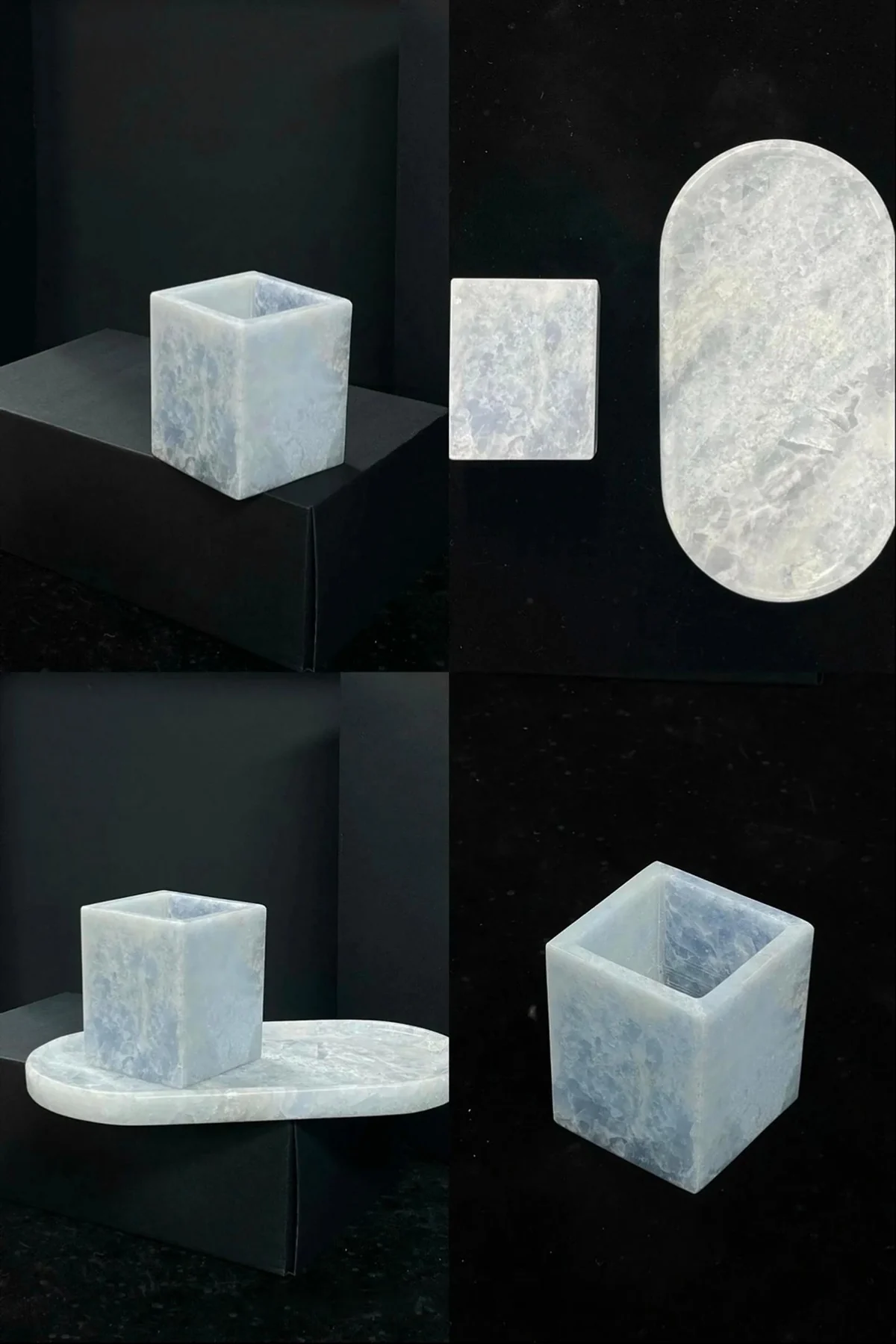
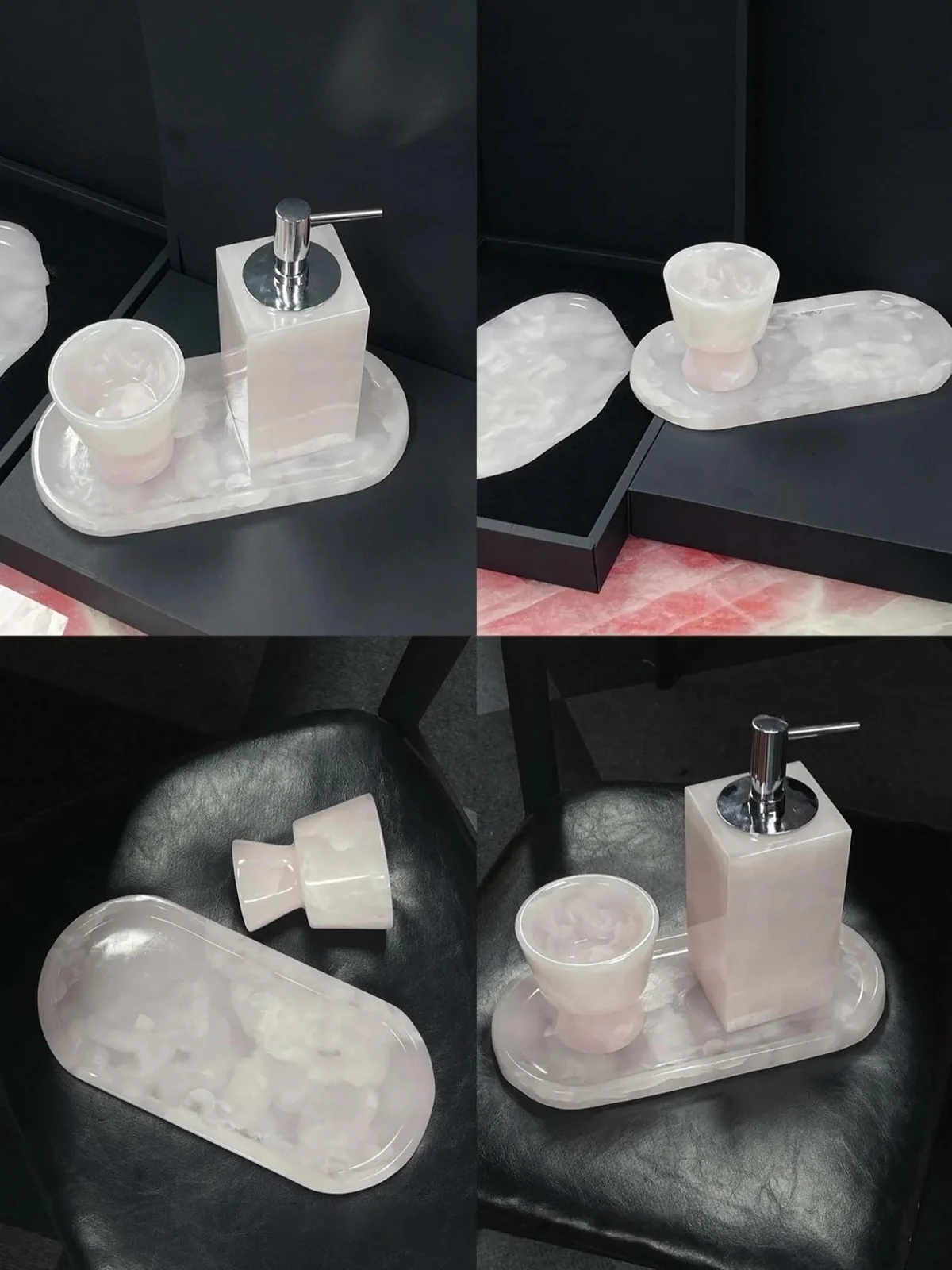
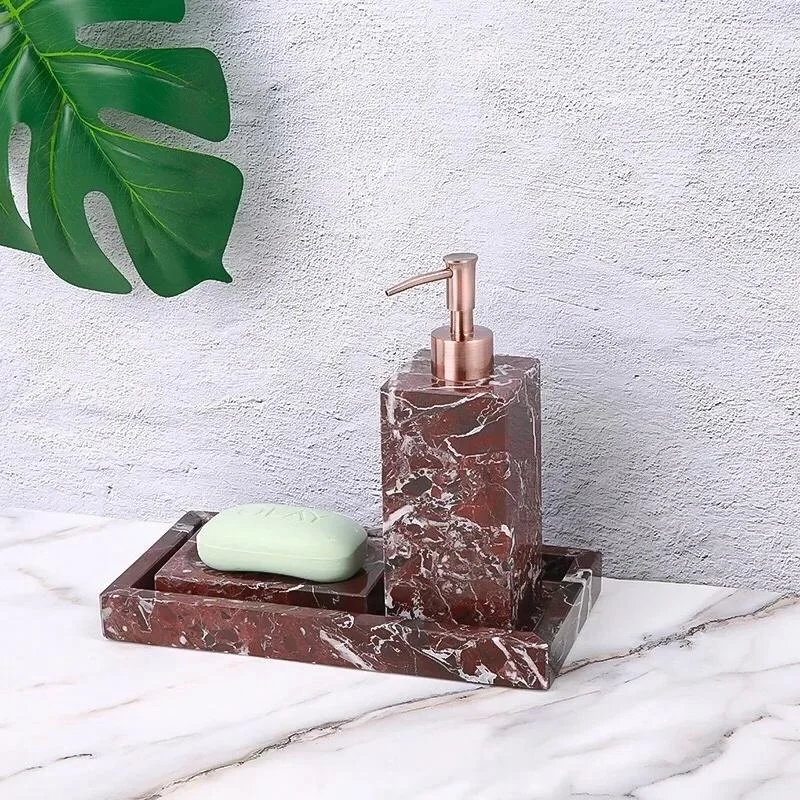
Tray and amenity layout references
Supplied product photographs for discussing form, arrangement and visible appearance. Confirm stone identity, dimensions and suitability for your project through sample review; these references are not a stock catalogue or a customer delivery case.
Make lifting part of the housekeeping review
Tray weight becomes meaningful when combined with the actual contents and the way staff handle them. Weigh the complete sample and have housekeeping assess the intended movement at the mock-up vanity. Do not assign a universal acceptable weight from a photograph or an empty prototype.
Check whether fingers can reach beneath the tray without lifting it by a thin rim. An underside relief or raised support may help, subject to review of the stone section and stability. Keep exposed edges comfortable to touch and accessible to a cloth.
For routine cleaning, plan to remove loose bottles before moving the stone unless the assembled handling method has been specifically evaluated. Lift rather than drag the tray across the counter. Include the temporary setting-down location in the review: staff need a suitable place to put it while cleaning beneath it.
Review removable liners and feet as separate components
Decide what a liner needs to do
A removable liner can separate bottles from the tray surface and offer an independently replaceable contact layer. Define its material, finished size, edge shape and removal method. Check that it lifts out without tools, lies correctly after cleaning and does not create inaccessible pockets of retained moisture.
Ask the component supplier about compatibility with the selected stone, any surface treatment and the hotel’s cleaning products. Evaluate the actual assembly for colour transfer, residue, odour, dimensional change and drying. Record who supplies replacements. A generic description such as “soft liner” leaves these decisions unresolved.
Check the underside on the proposed counter
Feet also belong in the project specification. Bentley’s Monti hospitality tray uses small feet, illustrating that the underside is an intentional part of a bathroom accessory design. That resin product’s performance should not be transferred to a natural stone assembly. Bentley Monti product details
Define the proposed foot material, attachment and location. On the actual countertop finish, assess rocking, movement during bottle use, visible marks and access for wiping underneath. Include wet and freshly cleaned conditions in the sample review. Any change to feet or adhesive should trigger another compatibility check before use across rooms.
Choose drainage according to the placement
A flat-bottomed tray without outlets is a reasonable starting proposal for capped bottles and dry amenity packets away from regular splashing. Its cleaning routine still needs a way to remove spills and dry the surface.
For wet soap, first consider a removable soap dish within the arrangement. If grooves or holes are proposed, trace the complete water path. Where does liquid leave the tray, and can staff reach that area? A hole opening onto a vanity may simply move water underneath the object.
Review the intended drainage arrangement with water on the assembled sample. Observe retained droplets, contact beneath the tray and how easily every surface can be cleaned. Final geometry depends on that review; drainage features alone do not establish suitability for a wet location.
Evaluate the sample with the hotel’s care routine
Honed marble may be proposed for its low-sheen appearance. If travertine is considered, define the treatment of surface openings and review cleaning access on the actual sample. Confirm the stone and finish through the project’s material selection and customization discussions.
The Natural Stone Institute recommends neutral cleaner or other suitable mild cleaning products, rinsing and drying with a soft cloth. It warns that acids can etch calcareous stone and that abrasive cleaners can scratch some surfaces. Sealing does not eliminate staining risk. These points should inform the hotel’s care plan. Natural Stone Institute care guidance
Obtain the exact product instructions rather than choosing by the word “bathroom” on a cleaner label. For example, Lithofin’s MN Easy-Clean technical sheet describes a mildly alkaline cleaner for natural stone and advises adapting use to the surface and trying an inconspicuous area where experience is lacking. That is manufacturer-specific guidance, not approval for every tray assembly. Lithofin technical information
Use an agreed sample-review sheet covering:
- Bottle arrangement, hand access and pumping movement
- Empty and loaded handling at the vanity
- Cleaning access around corners, liners and feet
- Observations after the proposed cleaning and drying routine
- Appearance under the intended bathroom lighting
- Replacement of removable components and return to the approved layout
Record the products used, procedure and observations, with photographs where useful. A room trial can reveal operational problems; it does not establish a general performance rating. For oil exposure, use the separate honed marble stain-prevention guide when preparing the review.
Keep room replenishment tied to an approved revision
Count placement points by room type, then discuss spare trays and replacement components with operations. Set quantities from the property’s opening plan, storage space and replacement experience. Avoid assuming one spare percentage fits every hotel.
Keep the approved drawing, arrangement photo, stone description, finish reference and underside component details together. Identify the revision on purchase and reorder documents. Ask for representative appearance references so later replacements have a clear review basis; a stone name alone cannot promise identical veining.
Record what happens if the amenity supplier changes a bottle. Recheck fit and operation before reordering trays to an old drawing. Agree project quantities, sample steps and delivery requirements in writing, and coordinate room identification with the shipping brief.
Considering a travertine version? Use the filled-versus-open-texture tray review to specify the contact faces, cleaning trial and appearance approval before confirming the material.
Frequently asked questions
What dimensions should a custom stone vanity tray have?
Start with the available countertop area and the actual amenities. Specify both overall size and usable interior space, including clearance for fingers and pump operation. Confirm the proposed arrangement with a full-size outline and a physical sample before approving dimensions.
Should a hotel bathroom tray have drainage holes?
Only when the placement and cleaning plan provide a useful outlet for the water. Holes may discharge liquid beneath the tray. For wet soap, consider a removable dish and evaluate the complete water path on a sample.
Can liners and feet be replaced independently?
They can be proposed as replaceable components, but the attachment, fit and supply arrangement need agreement. Check compatibility with the stone, countertop and cleaning products. Keep approved component details with the tray drawing so replacements follow the same specification.
Can a later order match the original stone trays?
Review a later order against the approved material description, finish and appearance range. Natural veining and colour can vary, so identical visual matching should not be assumed. Preserve reference samples or photographs and confirm the proposed material before each replenishment order.
Send a written project brief
For a DeHong Stone project review, send dimensions, reference images or drawings, intended amenities and quantity to hefeng@dehongstone.com. Include the vanity position and housekeeping requirements where available. Continue in writing through WhatsApp, or visit www.dehongstone.com. Material suitability, component options, sampling and order terms can then be discussed for the specific design.
Sources
- Natural Stone Institute: Care and Cleaning of Natural Stone
- Bentley Europe: Ibu Amenity Tray M White Marble
- Bentley Europe: Monti Amenity Tray White Marble
- Lithofin: MN Easy-Clean Technical Information
Review the recesses and usable layout of the Hotel Tile reference against the actual amenities, cleaning routine and selected sample.
Buyer questions for this project
Start with the short answer, then expand the project considerations before preparing your brief.
Q: How do marble and travertine compare for hotel bathroom accessories?
Short answer: Compare the specific stone samples, surface treatment, visible pores or filled areas, cleaning compatibility and appearance for the intended bathroom use.
Project considerations
For a vanity tray, describe splash exposure, the toiletries it will hold and the actual cleaning products and routine. Review absorption-related behaviour, surface maintenance and any pore filling through samples or suitable material information. The names marble and travertine alone do not prove waterproofness, stain resistance or hygiene performance. Approve the material and finish together with the required use and cleaning checks.
Apply the guidance to your project
For a project-specific review, send your intended use, drawing or reference, dimensions, material preference, estimated quantity and delivery destination to DeHong Stone. The team can review which details need sample confirmation before quotation.
Website: www.dehongstone.com
Email: hefeng@dehongstone.com
WhatsApp: +86 139 8660 4493
General purchasing guidance is not a project quotation or a material test result. Confirm specifications, verification and terms for the selected sample.
Bring your drawing and project requirements.
Include your intended use, reference, dimensions, material preference and quantity. Agree the feasibility review and sample requirements in writing.