Stone Keepsake Boxes: Lid Fit, Interior Clearance and Packing Before Ordering
Before ordering a natural stone keepsake box, agree the usable cavity, lid seating and opening method, contact surfaces, and protection for both lid and body during shipping. Review these details together on a drawing and a physical sample, with the intended contents and any liner. An outside dimension or attractive product image cannot confirm the fit. This DeHong Stone guide gives buyers a practical brief for small custom boxes before quotation and sample approval.
Published
Updated
Start with the usable interior, not the outside dimensions
A natural stone keepsake box can look generous while leaving less room inside than a buyer expects. For a jewellery presentation, desk accessory or hotel gift, begin with the objects that must fit. Record their largest dimensions, the space needed to remove them, and any pouch, insert or liner that will stay inside.
On the drawing, distinguish overall length, width and height from the usable cavity. Mark the narrowest internal width, corner radii and clearance beneath the closed lid. A rounded cavity cannot accept every rectangular item that fits its maximum length and width. Ask for the proposed internal shape to be reviewed with the intended contents before approving the outside silhouette.
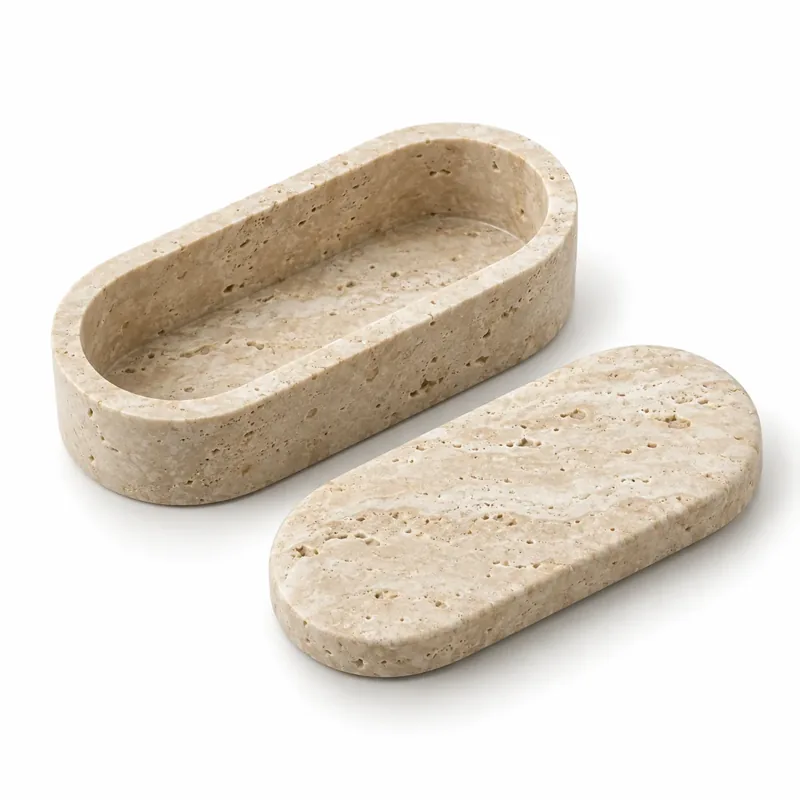
Use the Capsule Keepsake Box design reference to discuss the relationship between an elongated body and a removable lid. It is a concept direction for custom development; it does not establish finished dimensions or an available stock item.
Specify how the lid should sit, open and stay paired
“A close-fitting lid” is not a complete specification. Ask whether the proposal uses a flat resting lid, a locating step or another construction, and mark the seating surfaces on a section drawing. Agree where clearance is measured and how the finished pair will be checked. Do not choose a universal gap from a photograph.
- Seating: review whether the lid rests consistently in its intended position, without unwanted rocking or contact at an unfinished edge.
- Opening: demonstrate how fingers lift the lid with the box resting on a stable surface. Confirm an accessible grip; never assume the lid can carry the body.
- Pairing: decide whether each lid stays with its own base or whether interchangeability is required and must be demonstrated.
- Orientation: identify the intended front and any preferred relationship between the pattern on the lid and body.
Put the agreed checks and drawing revision into the dimensional and prototype approval record. A snug appearance does not establish an airtight, watertight or locking closure. Specify a different requirement explicitly if the intended use needs one; feasibility remains to be assessed.
Review the contact surfaces and any liner together
Identify the proposed stone, surface finish and treatment for the exterior, cavity, lid underside and base. These are separate contact areas. Review edges that a user will touch and where the box will rest on furniture. If jewellery or another delicate item will sit inside, include the intended pouch or liner in the sample review rather than assuming a stone surface provides suitable protection.
A liner changes the usable space. Record its material, thickness, attachment and replacement method; ask how it will be checked with the proposed finish. These are project requirements to agree, not evidence that a particular construction has passed testing.
Agree acceptable appearance ranges using the natural stone veining and colour guide. Matching lid and body does not mean the pattern repeats identically across every box. Photograph the approved pair with its orientation and sample reference.
The Natural Stone Institute’s care guidance explains that cleaning depends on stone composition, acidic products can affect calcareous stone, and sealing does not make stone stain-proof. Ask for care instructions appropriate to the selected stone and any liner; a polished appearance alone does not establish stain resistance.
Agree protection for the lid, body and complete shipping unit
For a removable-lid design, ask how the two components are protected from direct stone-to-stone contact during transport. Review whether the proposal packs them in separate protected positions or retains them together with a suitable separator and restraint. Confirm which arrangement preserves the matched pair and makes unpacking clear.
FedEx’s breakables guidance recommends weight-appropriate boxes, cushioning, restricted movement and individual protection for fragile items. Apply those principles to the actual stone box and shipping method; the packaging dimensions and materials still need project-specific review.
Request a packing sequence showing the protected lid, protected body, unit pack and outer shipping arrangement. Distinguish a presentation box from transit protection. Use the small stone object packaging checklist to agree what sample packing evidence or transport validation is needed. A neat packing photograph alone is not a passed shipping test.
Send one brief that connects the drawing, sample and quotation
Before requesting a quote for custom stone boxes, collect these decisions in one revision-controlled brief:
- Intended use, contents and required usable internal space.
- Overall dimensions, cavity shape and lid construction on the same drawing.
- Proposed stone, appearance range and finishes for each contact surface.
- Lid seating, opening method, pairing and orientation checks.
- Any liner, pads or other components, with their effect on space and handling.
- Quantity, destination, presentation needs and shipping arrangement for quotation review.
- Sample reference, unresolved points and the evidence required before approval.
Have the sample reviewer check the actual contents inside the lined or unlined box, remove and replace the lid, and record observations against the agreed drawing. Keep unverified points open instead of describing the sample as fully approved. DeHong Stone can review the drawing, sample references and requirements to assess a custom natural stone box; price, quantity conditions and timing belong in the resulting project quotation.
Stone keepsake box buying questions
Which dimensions matter most when ordering a stone box?
Specify both the outside dimensions and the usable cavity after any liner is fitted. Include the narrowest internal width, corner shape and clearance under the closed lid, using the intended contents to review the proposal.
Can lids be exchanged between different stone boxes?
Do not assume interchangeability. State whether lids must remain paired with their own bases or fit other units, then agree how that requirement will be checked on physical samples.
Does a close-fitting stone lid make the box airtight?
No. A close-fitting appearance does not establish an airtight or watertight closure. Any sealing or containment requirement needs a separately assessed design and suitable verification.
What should a buyer approve about packaging?
Review protection for the lid and body, prevention of unwanted movement, matched-pair identification, the presentation pack and the outer shipping arrangement. Agree the required validation separately from photographs of the packing process.
Apply the guidance to your project
For a project-specific review, send your intended use, drawing or reference, dimensions, material preference, estimated quantity and delivery destination to DeHong Stone. The team can review which details need sample confirmation before quotation.
Website: www.dehongstone.com
Email: hefeng@dehongstone.com
WhatsApp: +86 139 8660 4493
General purchasing guidance is not a project quotation or a material test result. Confirm specifications, verification and terms for the selected sample.
Bring your drawing and project requirements.
Include your intended use, reference, dimensions, material preference and quantity. Agree the feasibility review and sample requirements in writing.